Marble rock: identification clues and common lookalikes
Marble is a metamorphic rock made mainly of recrystallized calcite, dolomite, or both. Look for an interlocking granular texture on an existing surface, but keep limestone and quartzite in the comparison: color, veining, and a photograph alone cannot confirm marble.
In this guide
What kind of rock is marble?
Marble is a metamorphic rock dominated by recrystallized calcite, dolomite, or both. The USGS rock classification includes fine-grained as well as coarse-grained marble. You may see a mosaic of crystals, but obvious large crystals are not required.
The rock forms when a carbonate rock, commonly limestone or dolostone, changes under metamorphic conditions. USGS explains that metamorphism changes rock without melting it. A pale color or a polished finish alone does not establish that history.
Marble names the whole rock. Calcite names a mineral that can occur within it. If those descriptions seem contradictory, start with our rock versus mineral comparison.
 ROCK SCAN
Identify your rocks
Take a photo to explore a possible match.
iPhone and Android · In-app purchases
Look for texture before matching color
Examine an existing rough edge under diffuse daylight. Look for adjoining grains that reflect light at different angles as you turn the specimen. The USGS marble and limestone examples show marble crystals fitting closely together, in contrast to the fossil fragments visible in its limestone example.
Use that as a comparison, not a rule that every limestone must show shells. If grains are too small to resolve, record that limitation. Do not invent crystal boundaries from a blurry photograph.
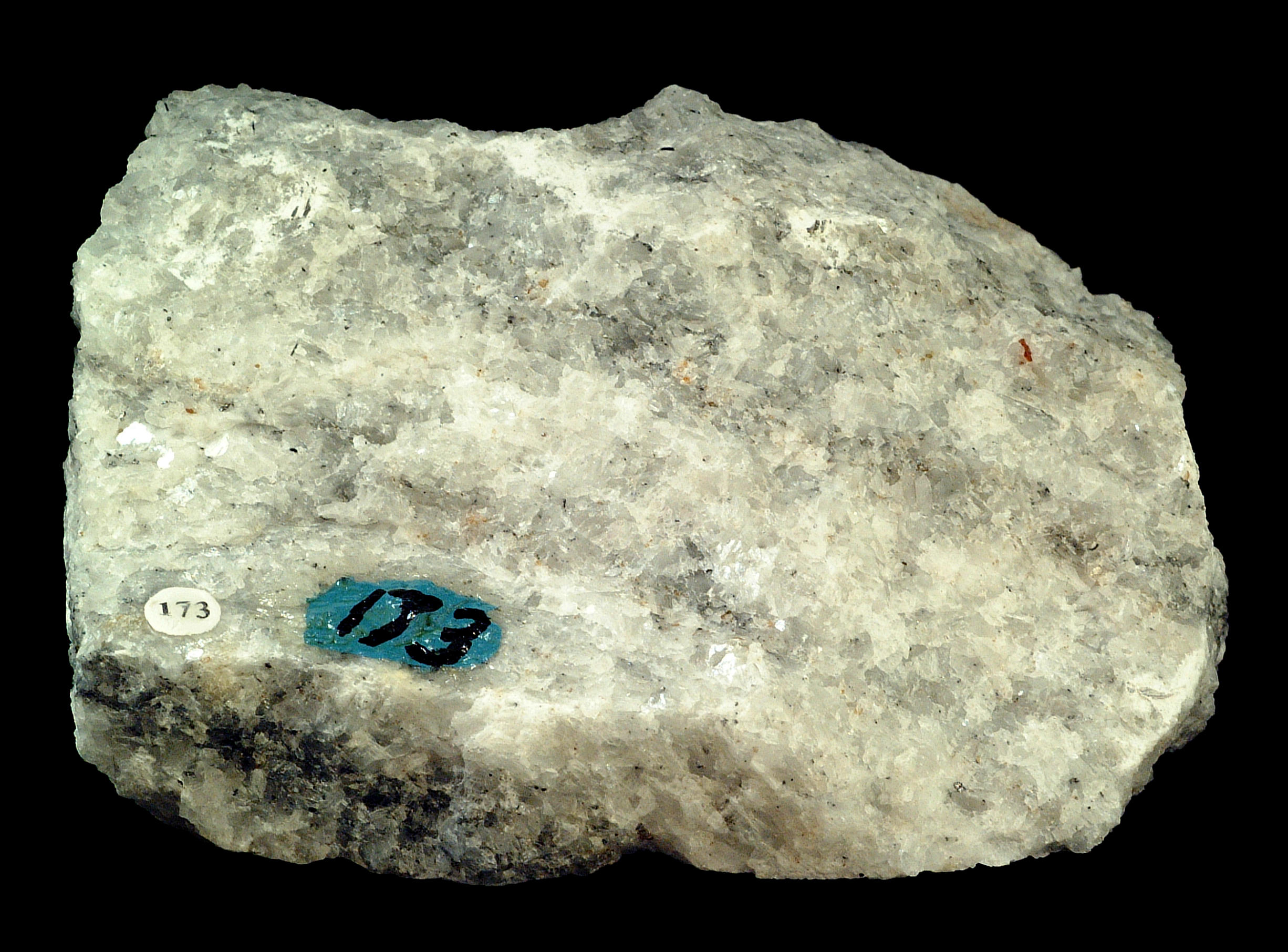
The hero photograph is a documented marble specimen from the Adirondack lowlands of New York. Its collection record identifies it as almost entirely calcite. The pale granular surface and scattered dark details are visible observations; a similar-looking unknown pebble still needs its own evidence. The painted numbers are collection labels, not geological features.
Marble, limestone and quartzite compared
| Candidate | What it is | Useful comparison | What a photo leaves open |
|---|---|---|---|
| Marble | Metamorphic carbonate rock | Recrystallized, adjoining mineral grains | Whether the grains are calcite, dolomite, or another mineral |
| Limestone | Sedimentary carbonate rock | Preserved shells or other sedimentary features, when present | Fine textures and the degree of later alteration |
| Quartzite | Metamorphic rock dominated by quartz | An interlocking granular texture that may resemble marble | Mineral identity and hardness |
The Utah Geological Survey describes both quartzite and marble as having interlocking grains. That overlap matters: “sugary-looking white rock” is a useful description, but cannot reliably separate the two.
Mineral properties can resolve questions that appearance leaves open. Our quartz versus calcite guide explains their hardness difference and why a photograph cannot measure it. A valued specimen or finished object is better examined in person than scratched to complete a home checklist.
Compare shell fragments, layers and fine texture in the limestone field guide.
Compare two documented specimens

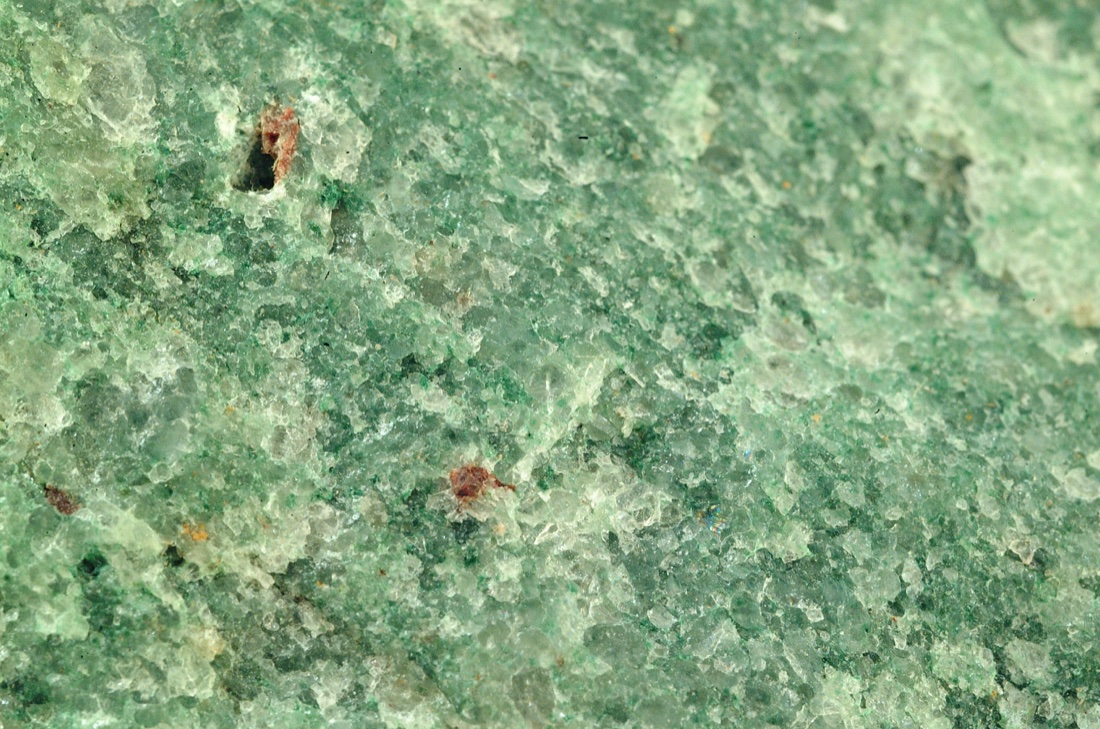

Both surfaces can look granular. In these photos, compare how the grains meet rather than using the color to decide. The photos show two individual samples. For more on the evidence that separates them, see the marble versus quartzite comparison.
How to photograph a marble or quartzite specimen
Find an unpolished edge and take a close-up in indirect daylight. Marble and quartzite can both look granular. A close-up shows the texture, but texture alone usually leaves the identification open. A pale vein can differ from the surrounding rock, so photograph it separately.
- Capture the whole specimen with a ruler or another familiar object for scale.
- Take a close-up of the grains at an unpolished edge and another of any veins.
- Save the location or original label with the photos. If the piece came from a shop or countertop sample, keep the supplier’s label too.
Use the rock identification checklist to record those clues. Scan the specimen with Stone Identifier for a starting point to compare against the clues you recorded.
ROCK SCANIdentify your rocks
Take a photo to explore a possible match.
iPhone and Android · In-app purchases
Is marble always white or veined?
Neither white color nor decorative veining is a requirement. The USGS examples include colored mineral inclusions, while the definition depends on composition and recrystallization. Record the pattern you actually see: scattered dark grains, a continuous stripe, or a largely uniform surface.
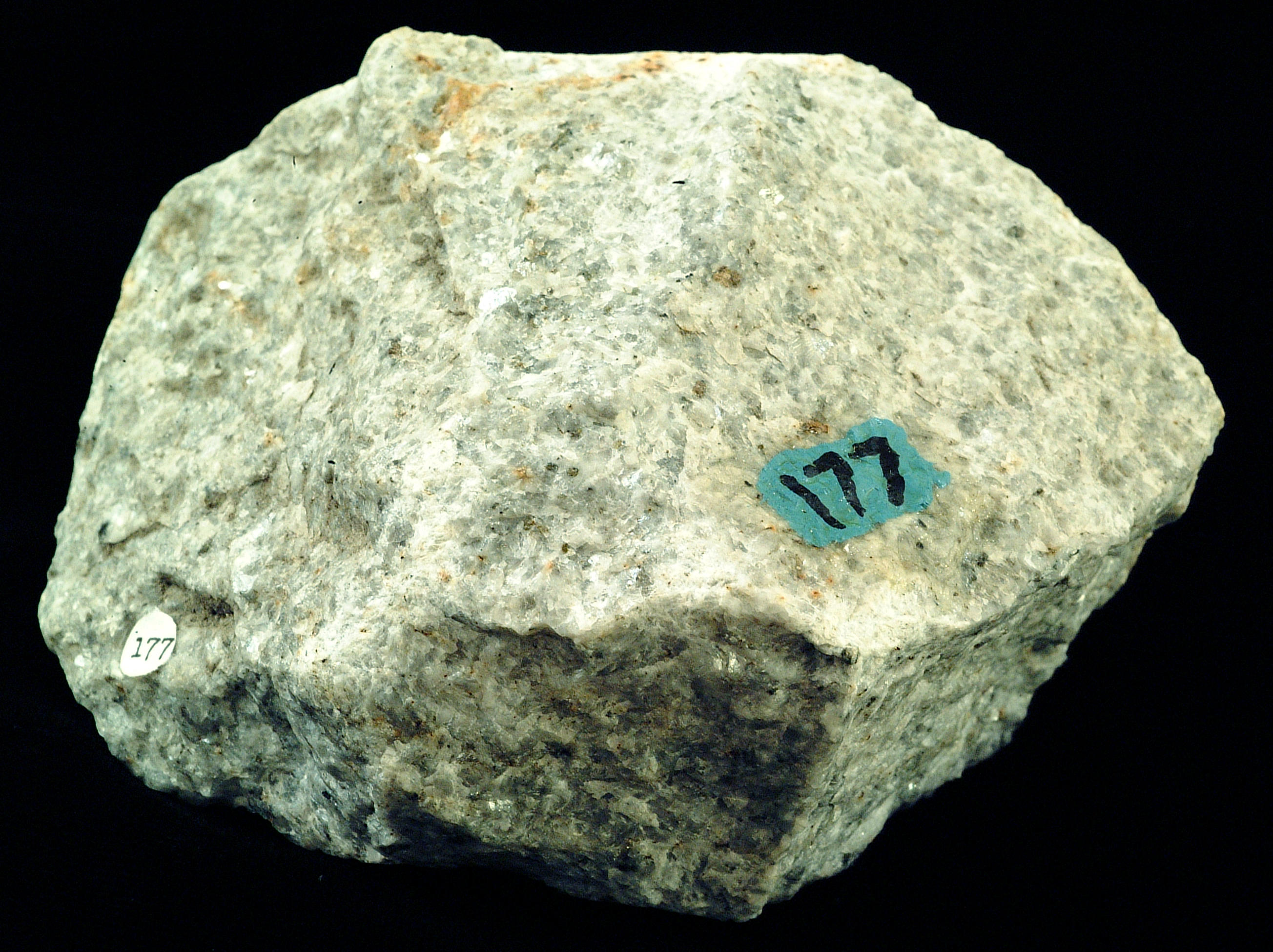

This second reference specimen comes from Lucerne Valley, California. Its GeoDIL collection record reports both calcite and dolomite and notes that separating them visually is difficult. Do not assign every light patch to one mineral and every gray patch to the other from the photograph.
Marble is commonly described as nonfoliated. The National Park Service contrasts nonfoliated marble with foliated rocks such as slate. This refers to mineral arrangement, not a promise that marble has no visible bands. For a specimen that splits into thin sheets, compare the observations in our slate rock guide.
What if a shop label says “marble”?
A building-stone label can use a broader meaning than a geological classification. The Utah Geological Survey notes that the building industry also classifies travertine and some compact limestones as marble.
For a countertop offcut, ornament, or polished tile, keep the product name and supplier information. Photograph an existing unfinished edge if one is accessible. A glossy face may conceal the texture you need. Do not assume a trade name proves metamorphic origin, or that a geological identification alone determines suitable cleaning products.
Make a useful identification record
Before choosing a name, collect four pieces of evidence:
- Whole specimen: photograph its outline in daylight against a neutral background.
- Existing edge: take a focused close-up of visible grains. Leave polished or hidden areas described as such.
- Scale: include a ruler in a separate view so the grain size can be judged.
- History: note where the stone was found or bought, and preserve any original label.
Our printable observation sheet keeps those details together. For example, “white pebble, sparkling grains, no visible shell fragments” gives a reviewer specific evidence to assess while leaving marble and quartzite open as candidates.
You do not need to add vinegar, acid, or a new scratch to obtain that first record. If composition matters, ask a geologist or qualified stone specialist which examination is appropriate. The calcite identification guide explains why a carbonate reaction alone cannot identify a whole rock.
Try Stone Identifier on iPhone or Android to generate a photo-based starting suggestion, then compare it with the texture and limitations above. Keep the original photos and treat the result as a candidate rather than confirmation of composition or origin.
Sources
- USGS: marble classification
- USGS: what are metamorphic rocks?
- USGS: recognizing limestone and marble
- Utah Geological Survey: igneous, sedimentary and metamorphic rocks
- National Park Service: metamorphic rocks
- Utah Geological Survey: building-stone terminology
- GeoDIL: Adirondack marble specimen and photo license
- GeoDIL: Lucerne Valley marble specimen and photo license
ROCK SCANIdentify your rocks
Take a photo to explore a possible match.
iPhone and Android · In-app purchases