Obsidian vs onyx: how to tell black stones apart
Obsidian is natural volcanic glass. True onyx is parallel-banded chalcedony, a form of quartz. Polished black pieces can look alike, so compare visible bands and existing edges, and check what the seller means by “onyx.”
In this guide
Obsidian and onyx are different materials
If you have two smooth black stones and no labels, a photograph may not separate them. Both can take a glossy polish. The useful first question is whether either stone retains a feature that polishing has not removed: a visible band, a rough patch, or an old broken edge.
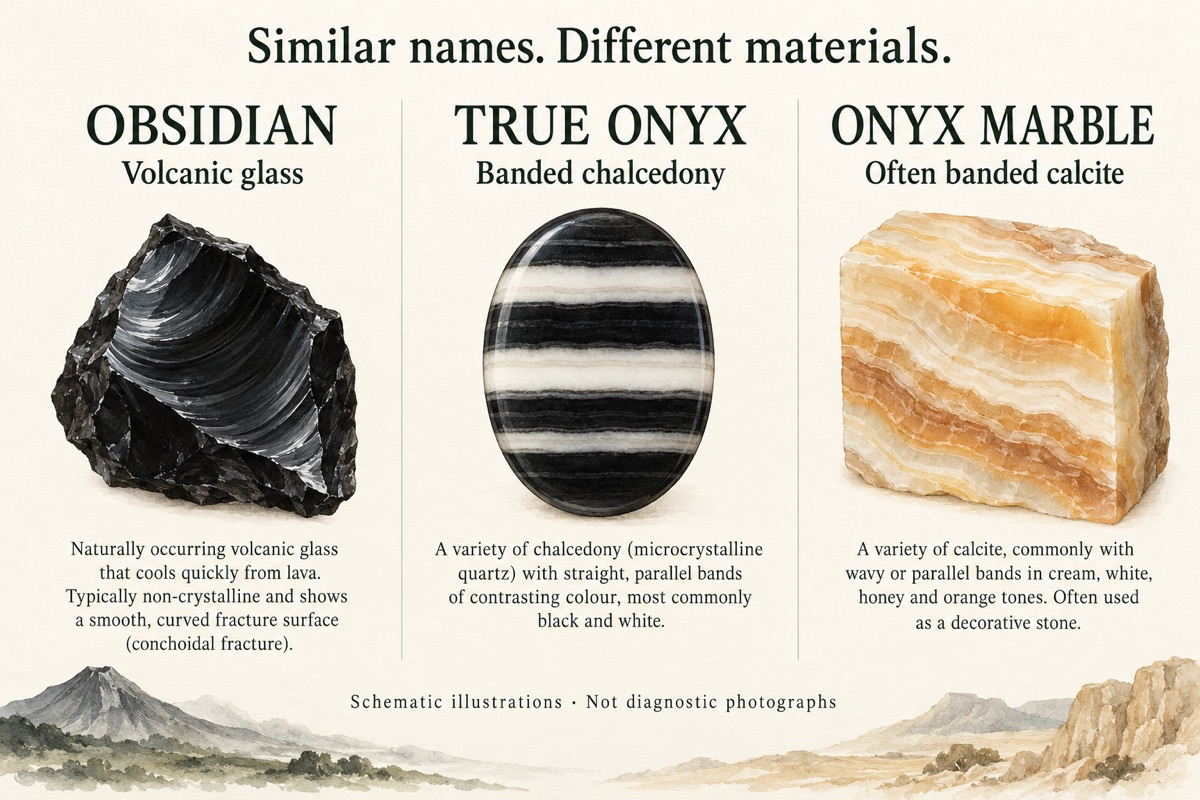
The USGS describes obsidian as volcanic glass produced when silica-rich lava cools rapidly. Onyx belongs to a different material group. The Utah Geological Survey defines true onyx as parallel-banded chalcedony, a fine-grained variety of quartz.
| Clue or question | Obsidian | Onyx |
|---|---|---|
| Material | Natural volcanic glass | Chalcedony, when the name refers to true onyx |
| A useful exposed feature | Curved, shell-like broken surface | Parallel bands, when visible |
| A polished black surface | Consistent with obsidian, but not proof | Consistent with stones sold as black onyx, but not proof |
| Main source of confusion | Other glassy or polished black materials | Trade names and treatments |
| Next step for an unmarked tumble | Photograph every side and any existing edge | Look for exposed bands and ask about the material behind the label |
Check what the onyx label means
“Onyx” on a price tag is not enough information. Some decorative stone sold as onyx or onyx marble is banded calcite. The Utah Geological Survey documents a reddish-orange and cream calcite deposit at Mount Nebo that carries that name. A carved ornament with that label therefore needs a different comparison from a chalcedony bead.
Black onyx also deserves a treatment question. GIA has documented dyed black chalcedony sold as black onyx, as well as glass imitations. Its guide to gem treatments includes dyeing of chalcedony. Treatment and material identity are separate questions: a color treatment does not tell you, by itself, whether the base material is glass or chalcedony.
Ask the seller three short questions: What is the material? Is the color treated? What supports the identification? Keep their answer with the receipt. “Black onyx bracelet” is a product description; a specific material identification gives you something you can check.
Look at an existing edge, not just the shine
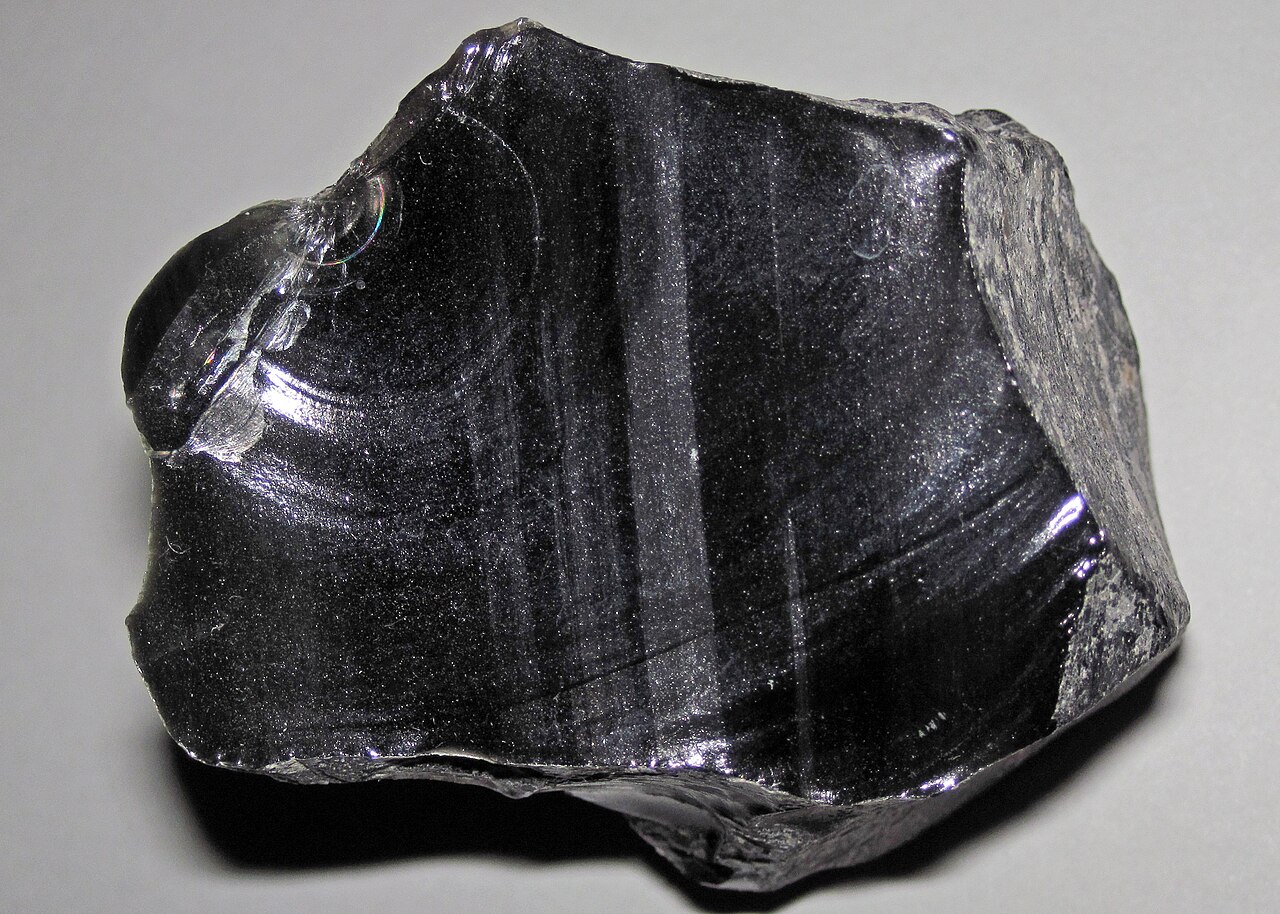
Turn the stone under diffuse daylight. A broad curved depression or shell-like ripple on an existing break can help you compare it with obsidian. Do not make a fresh chip to expose one. The edges of broken glassy material can be sharp, and a new break permanently changes the object.
The hero photograph shows a real obsidian specimen, not an example of every black stone you might find. Compare the broad surface and edge shape before matching color. A highlight on polished stone can look like a white band until you move the light.
To check a suspected band, turn the specimen and watch whether the line stays in the same place. A reflection shifts as the lighting changes. If a line remains visible, take a close-up and a wider view showing where it crosses the stone. The line is an observation to investigate, not an identification on its own.
Tumbled obsidian vs onyx: why it is harder
Tumbling rounds edges and smooths the surface. The finished shape tells you about the polishing process, not necessarily the original material. Two black tumbles may have no exposed structure that a beginner can use to separate them.
Start with a comparison you can repeat. Place both stones on the same neutral background, photograph them under the same light, then turn each over. Note any banding, rough patches, or existing chips. If all you can record is “black, rounded, shiny,” leave both names open.
Do not use how cold a stone feels or its weight in your palm as a verdict. Different sizes, room temperatures, and handling times make those comparisons inconsistent. An examiner can choose measurements appropriate to the object; guessing from a hand-held impression adds confidence without adding reliable evidence.
Bands need context too
The agate photo below shows visible banding in another chalcedony material. It is an agate reference, not an onyx specimen. Use it to practice distinguishing a pattern within the stone from glare across a polished surface.
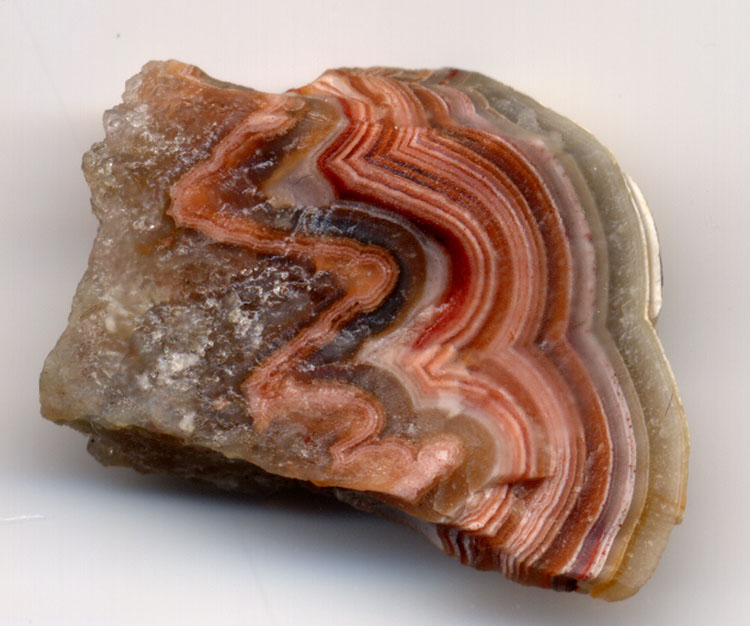

Follow several lines rather than selecting one stripe. Note whether they run alongside one another, curve around a center, or disappear under the surface. Our agate identification guide explains nested banding in more detail.
If a decorative piece appears to be banded calcite, the quartz vs calcite guide explains why material properties matter more than a similar finish. Avoid applying a property from one “onyx” reference to every object sold under the name.
Take photos that answer the right question
For a rough stone, include an overview and a side view of the best exposed edge. For a polished stone, include the front, back, and any patch where the interior pattern remains visible. Keep a ruler in a separate photograph for scale.
For jewelry, show the whole object as well as the stone. Photograph any markings or label, but do not pry a stone from its setting. A picture through a mounting may leave important surfaces hidden; tell the person reviewing it about that limitation.
Keep the original, unfiltered photographs. Dark stones can lose detail against a black background, while direct flash can hide the surface beneath a white reflection. Move the light before editing the image to make it look clearer.
Common questions about black onyx and obsidian
Are obsidian and onyx the same stone?
No. Obsidian is glass; true onyx is chalcedony. Similar color and polish do not make them the same material. Check trade-name uses of onyx separately.
Can I tell from a tumbled stone photo?
Sometimes a visible feature helps narrow the options. A uniformly black polished pebble may not show enough detail. Keep a working label such as “black polished stone” until you have stronger evidence.
Can an app confirm whether my stone is genuine?
A photo suggestion can help you choose candidates to compare. It cannot verify every treatment, material property, or seller claim. For a purchase, appraisal, or inherited piece, take the stone and its history to a qualified gemologist.
Sources
 ROCK SCAN
Identify your rocks
Take a photo to find a match.

iOS 18+ · In-app purchases