Pumice rock: the light, bubbly volcanic rock explained
Pumice is a volcanic rock with a frothy texture, many gas-bubble cavities, and unusually low bulk density. A piece often looks pale and feels surprisingly light for its size. The National Park Service describes pumice as a highly vesicular pyroclastic rock with thin cavity walls, commonly of rhyolitic composition.
In this guide
“Vesicular” means full of cavities left by gas bubbles. “Pyroclastic” describes material fragmented during volcanic activity. These terms explain the texture more reliably than a color name does.
Start with the texture
Look across an existing surface in good light. In typical pumice, numerous closely packed cavities leave thin walls between them. The overall effect can resemble a rigid foam. Some cavities are stretched rather than perfectly round.
Compare that observation with the weight of a similarly sized, solid-looking stone. Very low weight supports a pumice identification, but the comparison is qualitative. It does not measure density, and it cannot establish composition.
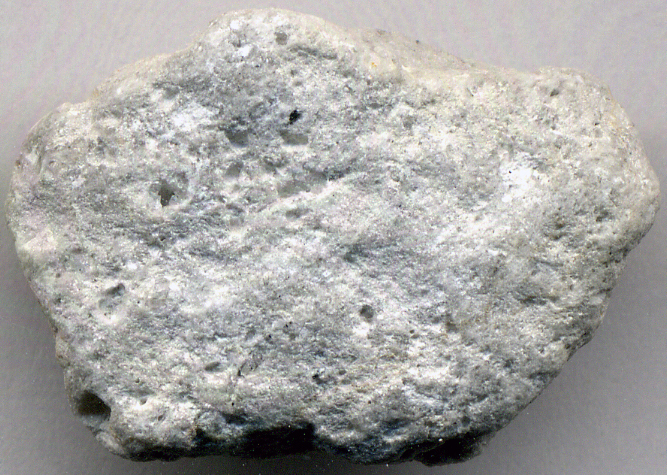
The specimen pictured here illustrates the pale, porous appearance. Do not expect every sample to have exactly the same shade, pore size, or outline.
 ROCK SCAN
Identify your rocks
Take a photo to explore a possible match.
iPhone and Android · In-app purchases
Does pumice always float?
Many pumice specimens float because their bulk density is low enough, and the photographed specimen's source describes floating pumice after the Krakatoa eruption. Treat floating as supporting evidence, not a definition or a required test.
A sink-or-float result on an unidentified object is not enough to name it. Materials other than pumice can be lightweight, and a photo cannot show how much water a porous specimen has taken up. There is usually no need to soak a collectible sample just to begin identifying it.
Pumice, scoria, and obsidian
The National Park Service describes both pumice and scoria as vesicular volcanic material. Scoria is commonly associated with basaltic compositions. Hole-filled volcanic rock therefore deserves a closer look before being labeled pumice.
Obsidian offers a useful contrasting texture: it is volcanic glass, typically with smooth, glassy surfaces rather than pumice's frothy network of cavities. If your sample looks glassy and black, see our obsidian versus onyx comparison before relying on color.
Color, cavities, and apparent weight belong together as clues. None is a universal standalone test.
How to document a possible pumice find
Photograph the whole piece and a close-up of the cavities, with a ruler alongside it. Record the place it was found and whether it came from a natural exposure, a garden product, or a shop. That context can explain why a volcanic-looking object appears far from a volcano.
Use the description “possible pumice” while the evidence is incomplete. A clear photograph can help narrow the options, but exact volcanic composition and provenance require more than an image.
Compare a photo with these clues
Try Stone Identifier on iPhone or Android for a photo-based starting point, then compare the suggestion with the visible features described here. A photo suggestion is not a conclusive specimen test.
Sources
 ROCK SCAN
Identify your rocks
Take a photo to explore a possible match.
iPhone and Android · In-app purchases