Pumice vs. Scoria: How to Tell Them Apart
Pumice usually has tightly packed holes with thin, glassy walls. Scoria often has wider holes and thicker walls, so a dry piece of the same size tends to feel heavier. Start with the texture on an exposed face.
In this guide
Start with the material between the holes
The cavities in both rocks are called vesicles. They’re spaces left by gas bubbles as the molten rock cooled. Look at several holes on an exposed face that already shows the interior. The amount of solid rock separating neighboring holes gives you a better starting point than the color of the outside.
| What to look at | More typical of pumice | More typical of scoria |
|---|---|---|
| Material between holes | Thin glass walls give the surface a frothy texture | Thicker partitions leave more solid rock visible |
| Hole pattern | Many small, close-set openings | Often coarser openings with more variation in size |
| Dry pieces of a similar size | Usually feels lighter in the hand | Usually feels heavier in the hand |
 ROCK SCAN
Identify your rocks
Take a photo to explore a possible match.
iPhone and Android · In-app purchases
Compare two real specimens
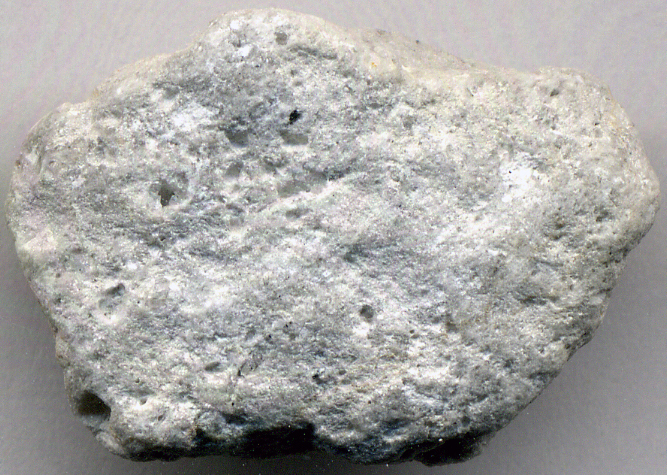
In the pale pumice photo, the small cavities crowd together across much of the surface. The dark scoriaceous basalt specimen from Hawaiʻi has some wide openings with visibly thicker ridges between them. Smaller holes appear on that piece too, so compare several areas before making a call. Different lighting can change how dark a specimen looks. If the outer surface is weathered or coated, check an exposed edge before relying on its appearance.
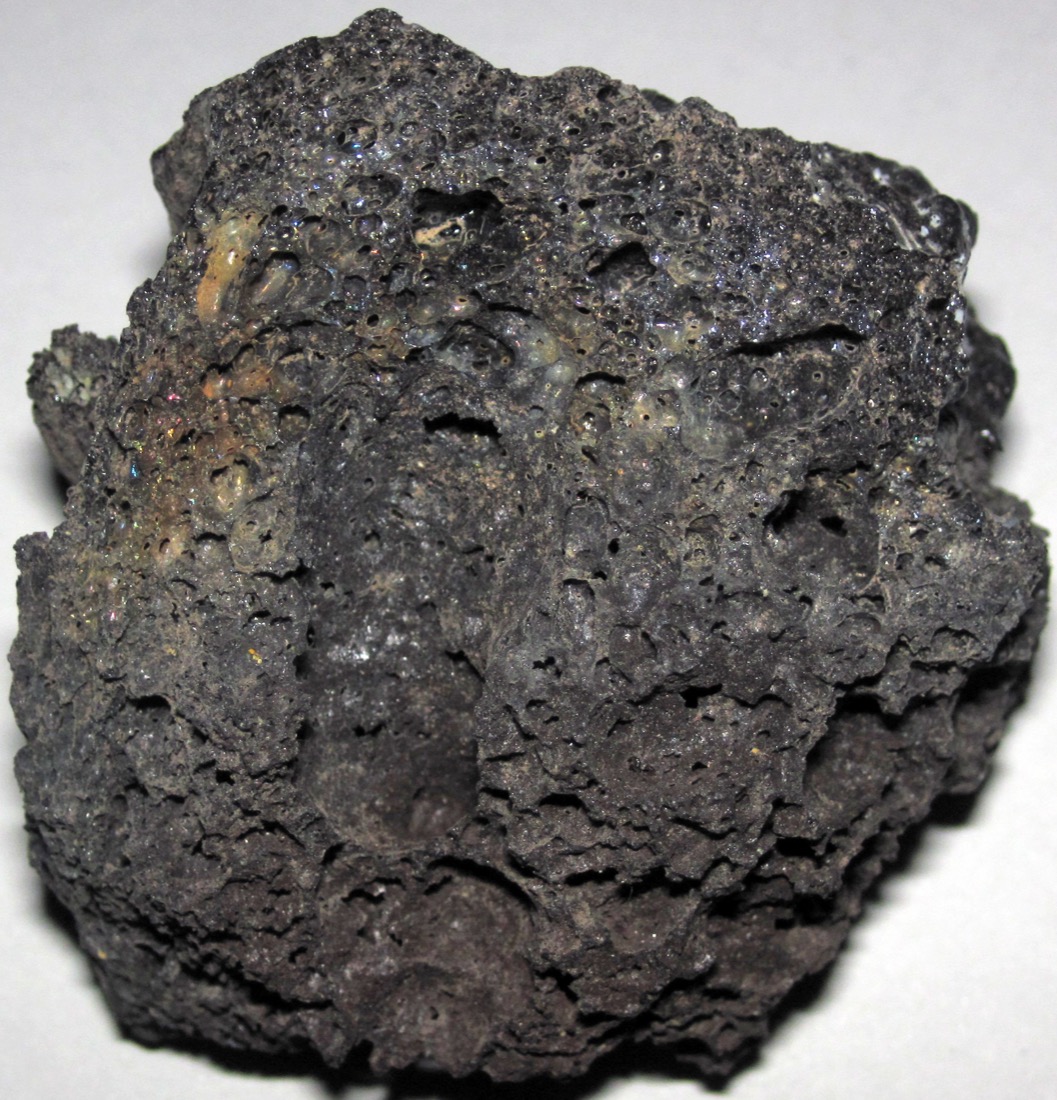

Scoriaceous basalt from Hawaiʻi, about 4.5 cm at its widest. Photo by James St. John, CC BY 2.0, resized.
Use weight as a second clue
If you have two dry pieces of roughly the same size, compare how heavy they feel. Pumice is usually lighter and often floats. Open, connected cavities can admit water quickly, though, and the USGS describes exceptionally light Hawaiian volcanic fragments that sink for this reason. A float test gives you one more observation and leaves the identification open when the textures disagree.
Photograph what you can see
Take one picture of the whole piece and a close-up of the holes with a ruler beside them. Record where you found it, if you know. Use the pumice guide and identification checklist to compare your notes. You can open Stone Identifier to explore a possible match from the photo and compare the result with what you see in hand.
A dark rock with fewer holes?
Compare your specimen with vesicular basalt, and record the solid groundmass as well as the cavities.
Sources
ROCK SCANIdentify your rocks
Take a photo to explore a possible match.
iPhone and Android · In-app purchases