Agate vs jasper: check the bands and thin edges
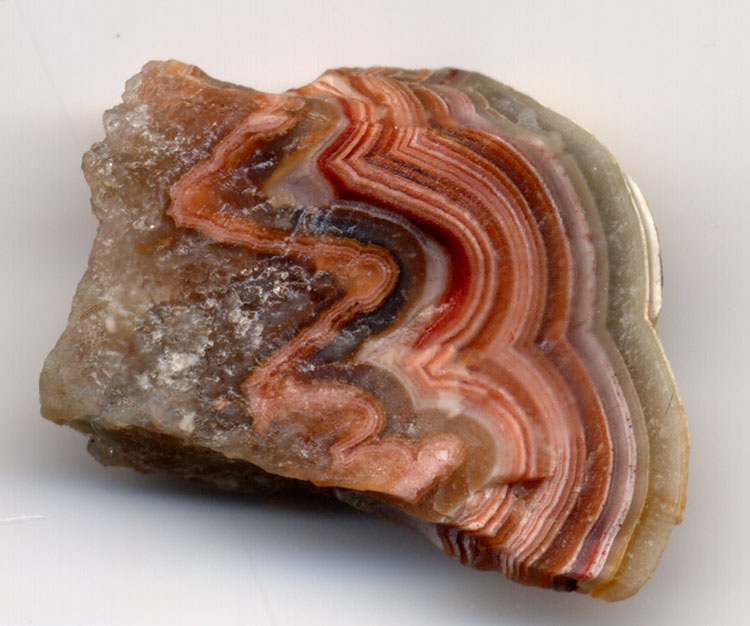
Agate often has repeated bands and can transmit light at a thin edge. Jasper is typically opaque. Some specimens combine traits, so use the two observations together and keep the label provisional.
In this guide
Follow the pattern
Trace a line through several curves on a naturally exposed face. In a banded agate, several nearby lines may follow the same curve. A surface scratch, color stain or single vein is different evidence.
 ROCK SCAN
Identify your rocks
Take a photo to explore a possible match.
iPhone and Android · In-app purchases
Look through a thin edge
Hold the specimen near indirect daylight and inspect a naturally thin rim. A translucent edge lets light through without a clear view of what is behind it. A thick or dark piece can look opaque, so compare areas of similar thickness.
Compare the dry surface
Water and polish can make patterns easier to see while changing reflections. Photograph the dry piece first, then change the angle to check whether a bright line moves. An opaque red or brown appearance alone does not establish jasper.
Save both observations
Note whether the bands repeat, where any light passes through, and whether the specimen is polished. The agate identification guide has more examples. Add an edge photo to the observation sheet.
Sources
ROCK SCANIdentify your rocks
Take a photo to explore a possible match.
iPhone and Android · In-app purchases