Chert vs Flint: Read the Broken Edge
Flint is a variety of chert. Both break in shell-like curves. The rock around a nodule, especially chalk, can help you narrow the name.
In this guide
Read the broken face
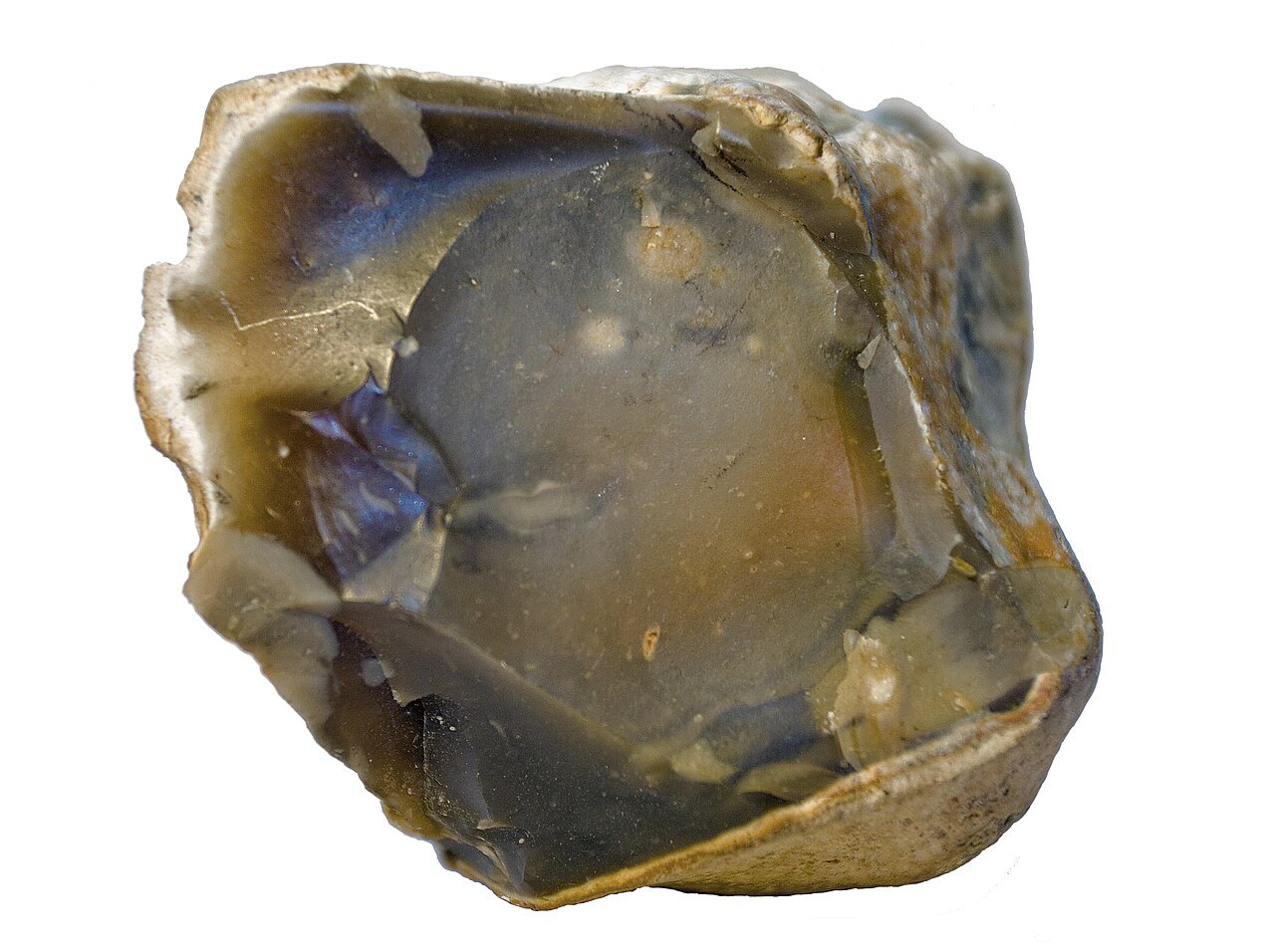
Turn the specimen until light falls across an existing chip. On the flint above, a broad, shallow hollow occupies most of the brown face. Smaller, overlapping hollows run along the left edge. This curved break is called conchoidal fracture. On some pieces you can trace ripples across the hollow, much like the growth lines on a shell. A smooth face can still have the same fracture even when the ripples are hard to see.
Use a hand lens on the interior. Chert is made mostly of silica in crystals too small to pick out individually. A sandy-looking face with grains you can trace around suggests a different rock. A shell-shaped chip also occurs in glass and obsidian, so look at the material behind the break and record the setting. Use an existing chip and hold the specimen by a rounded edge. A fresh flint edge can cut skin.
 ROCK SCAN
Identify your rocks
Take a photo to explore a possible match.
iPhone and Android · In-app purchases
Look for chalk around the nodule
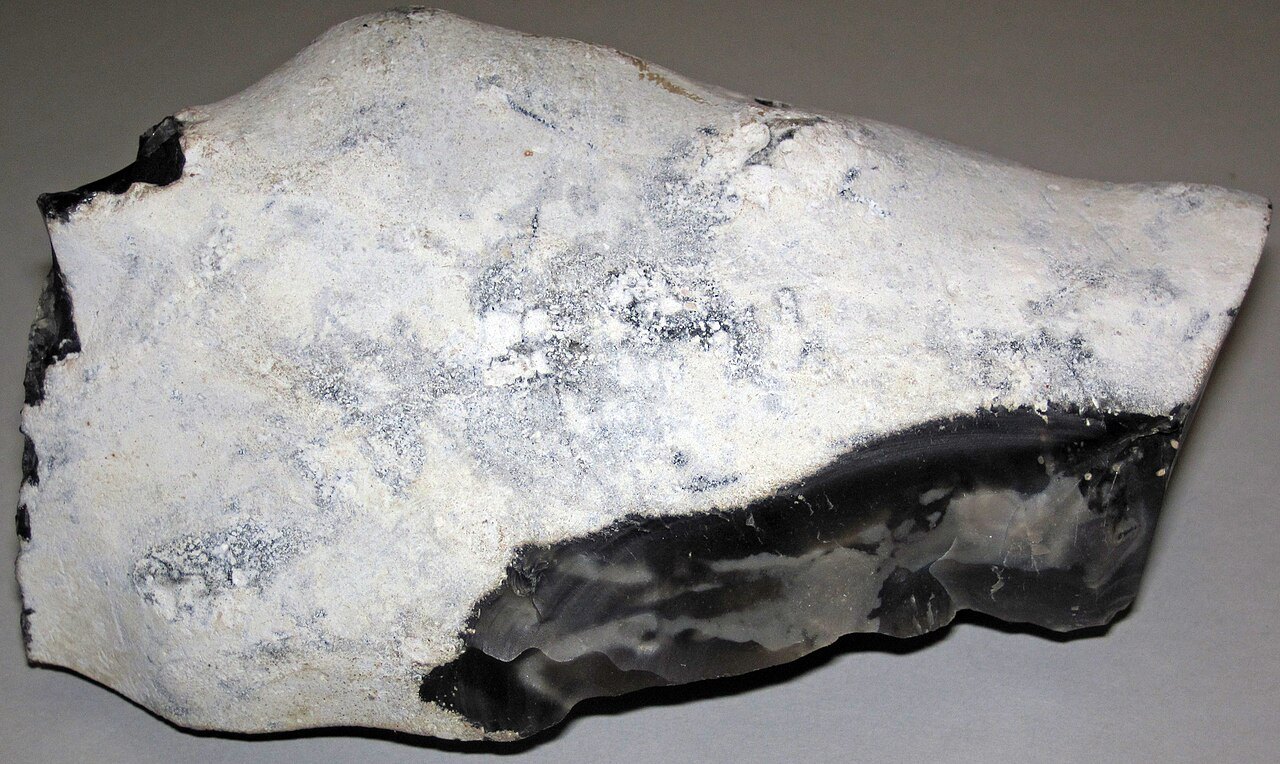

In this specimen from the White Cliffs of Dover, the pale material above the dark flint is chalk. The contact between the two records how the nodule sat in its host rock. The British Geological Survey uses flint for gray or black chert nodules found in Cretaceous chalk. Elsewhere the words can overlap in everyday use. When comparing two labels, check the locality and the naming convention used by the collection.
A white crust on a loose pebble gives you less information than chalk still enclosing a nodule in a documented bed. For a loose find, photograph the crust and the exposed interior together. If you found the piece on a gravel drive or beach, record that as the findspot and leave its original bed open. Our limestone identification guide shows what else to look for in a carbonate host.
Compare a nodule with bedded chert
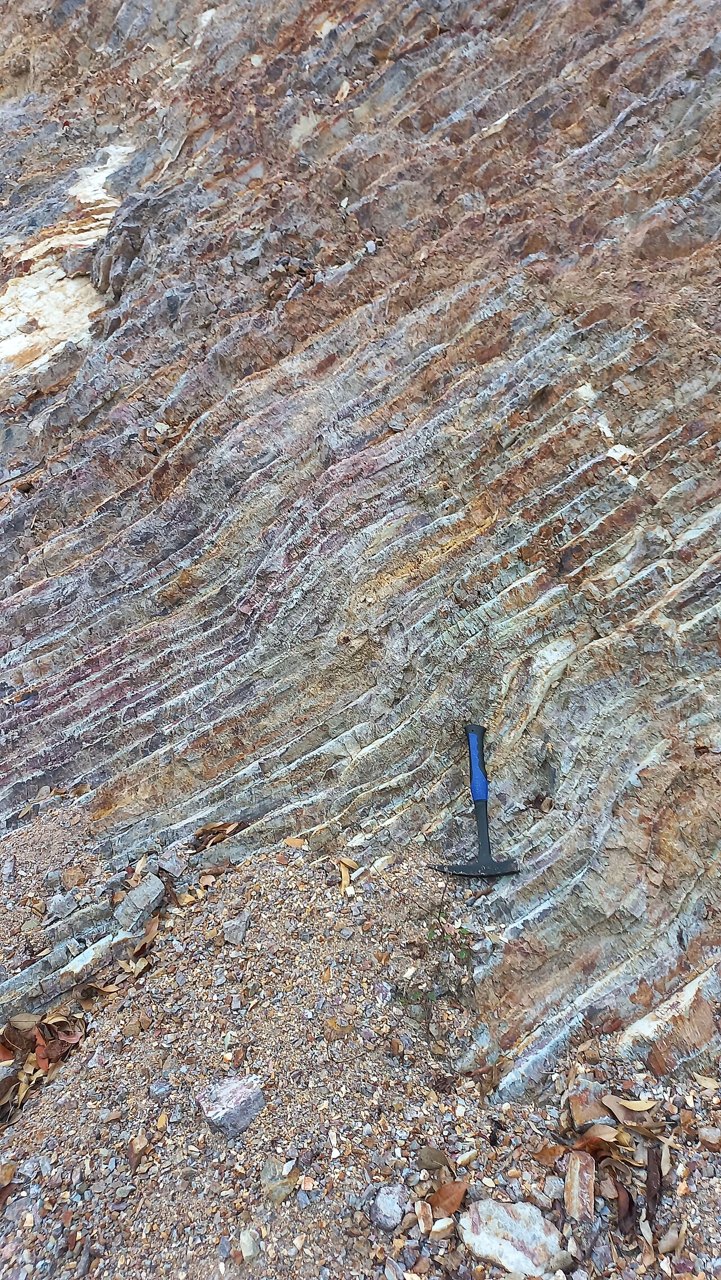

In this Philippine outcrop, follow a narrow band as it bends through the face. The layers continue side by side over a distance much greater than the width of an individual band. A small chip from one layer might have a curved edge much like a chip from the Dover nodule. Seeing the layer in place gives you the extra observation needed to call it bedded chert.
| What you have | What you can record |
|---|---|
| Fine, smooth interior with a curved chip | Possible chert. Check the surrounding material and setting. |
| A dark nodule enclosed in documented Cretaceous chalk | Flint in the British Geological Survey sense. |
| Silica-rich layers extending across a documented chert outcrop | Bedded chert. Photograph the layers with a scale. |
| Only a polished or rounded exterior | Record the surface and findspot. The fracture and original host remain unknown. |
When dark chert occurs in limestone
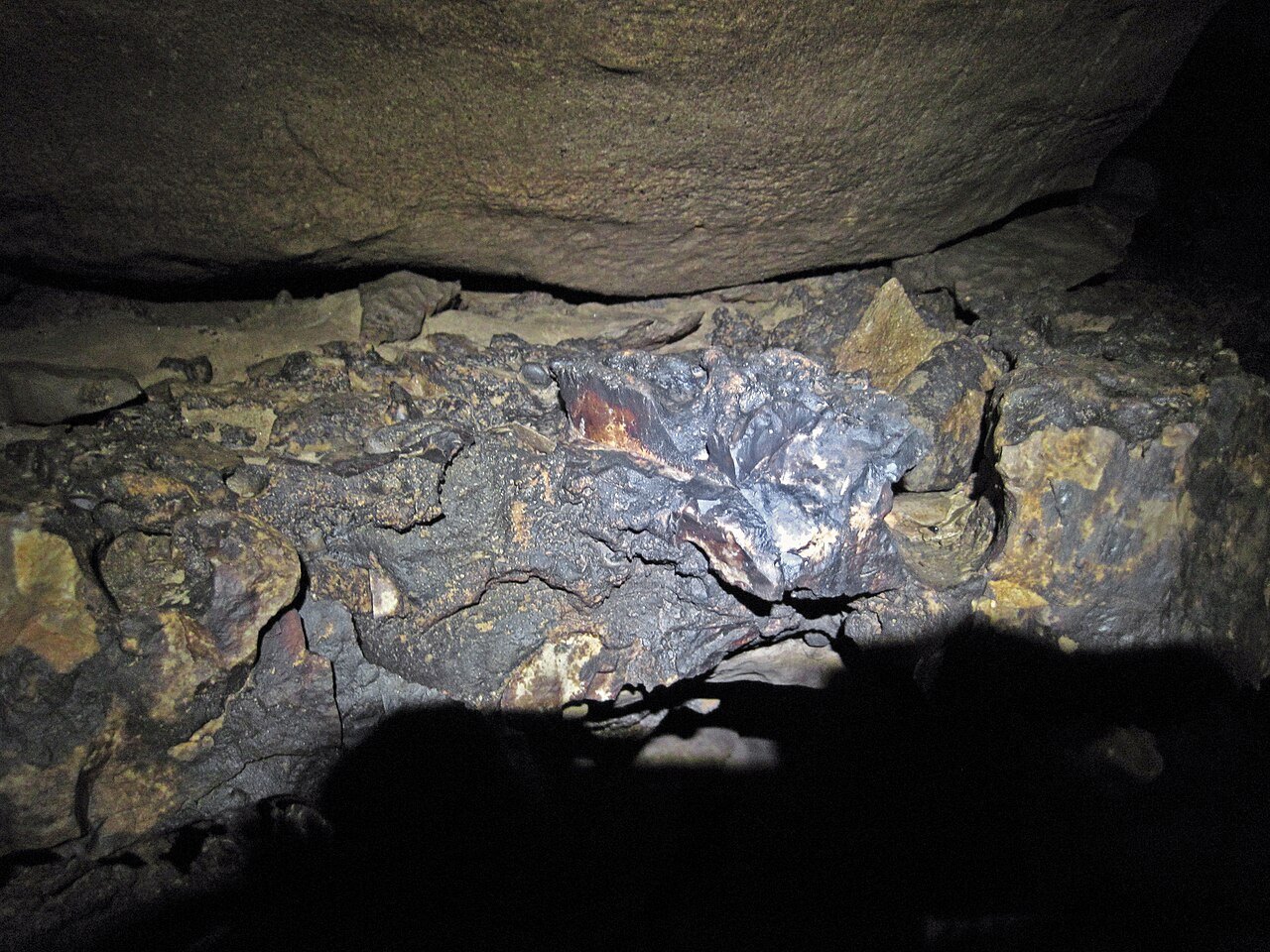

Look at the ragged ledge across the middle of the photograph. This is the Lost River Chert Bed in Kentucky. The chert stands proud where the limestone around it has worn back. A dark manganese oxide coating covers parts of its surface. From a close photograph of a loose piece, it would be easy to mistake that dark coating for the color of the interior.
Compare this with the white chalk around the Dover nodule. Both photographs show dark chert against a paler host, yet one records a resistant bed in Mississippian limestone and the other a nodule in Cretaceous chalk. At an outcrop, take one picture close enough to show an existing chip and a second from far enough away to see whether the dark material forms a band or a single lump.
Label a loose find
Suppose you pick up a dark pebble with a thumb-sized curved chip. “Possible chert, smooth gray interior, white rim, loose beach gravel” preserves details another observer can check. If a photograph from the original exposure later shows the nodule in chalk, add that evidence and update the label.
Print the chert and flint comparison card (PDF) to keep the three photographs beside your specimen and record the face, rind and host separately.
Sources
ROCK SCANIdentify your rocks
Take a photo to explore a possible match.
iPhone and Android · In-app purchases