Oolitic Limestone vs. Sandstone and Fossiliferous Limestone
Oolitic limestone contains abundant ooids, small rounded grains with a coating around a core. Look for repeated bead shapes and, on exposed grain interiors, nested rings. Quartz sandstone can look just as sandy. Fossiliferous limestone often shows shell walls, ribs or chambers.
In this guide
Examine the rounded grains
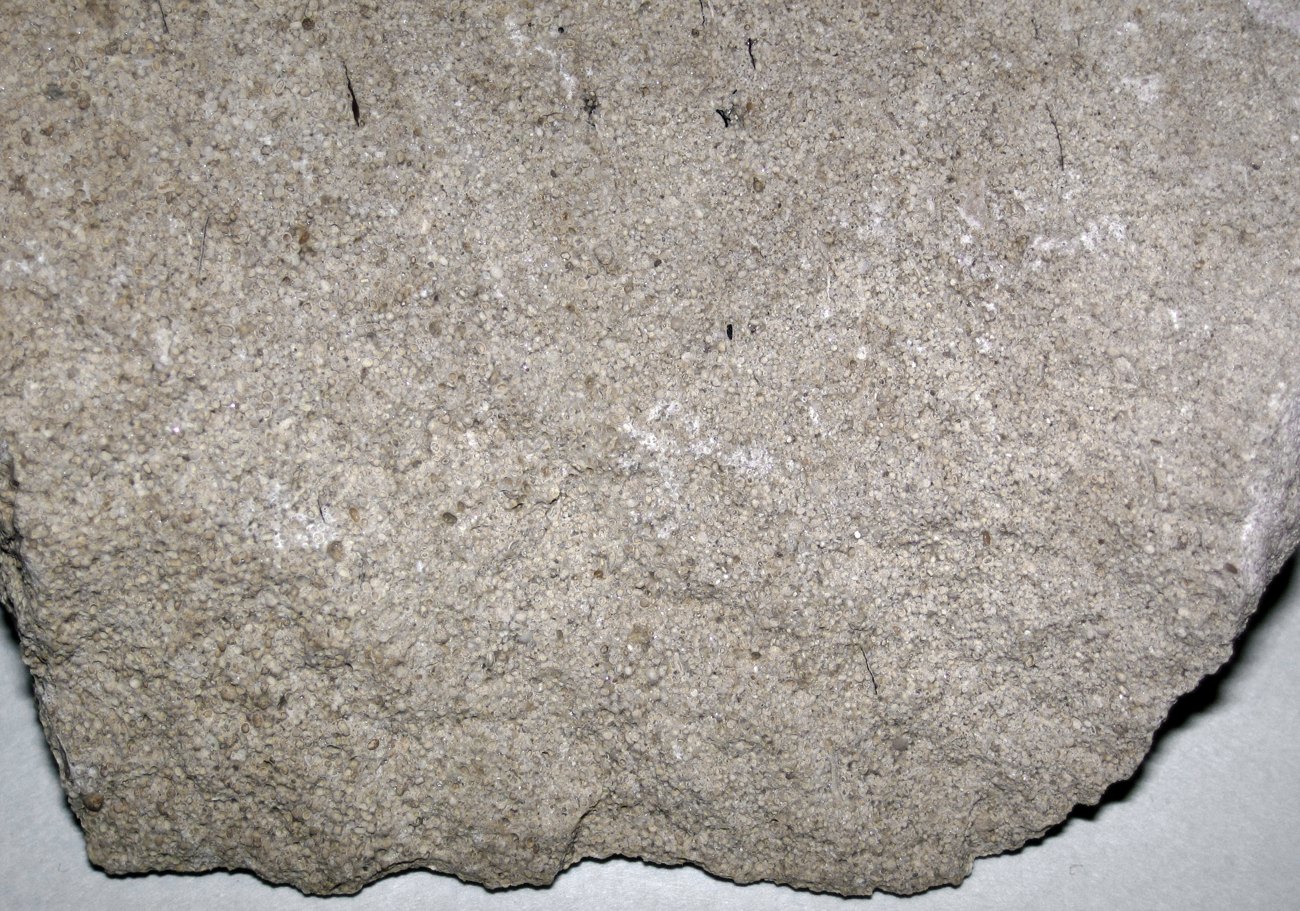
Set a millimeter ruler beside the specimen and examine an already exposed face with a hand lens. The Green River Formation sample above comes from Wyoming lake deposits. Look across the face for many small grains of similar size. Then look inside individual grains that the surface cuts across. In a well-preserved ooid, successive carbonate coatings wrap around a central grain, much like the layers in a cut onion. The rings can be too fine to see even when the outline is clear.
Coated grains can accumulate in shallow lakes as well as on shallow marine banks. A beach-like texture alone gives little away about the original environment. The most useful observation is what makes up the grains.
 ROCK SCAN
Identify your rocks
Take a photo to explore a possible match.
iPhone and Android · In-app purchases
Compare quartz sand and shell fragments
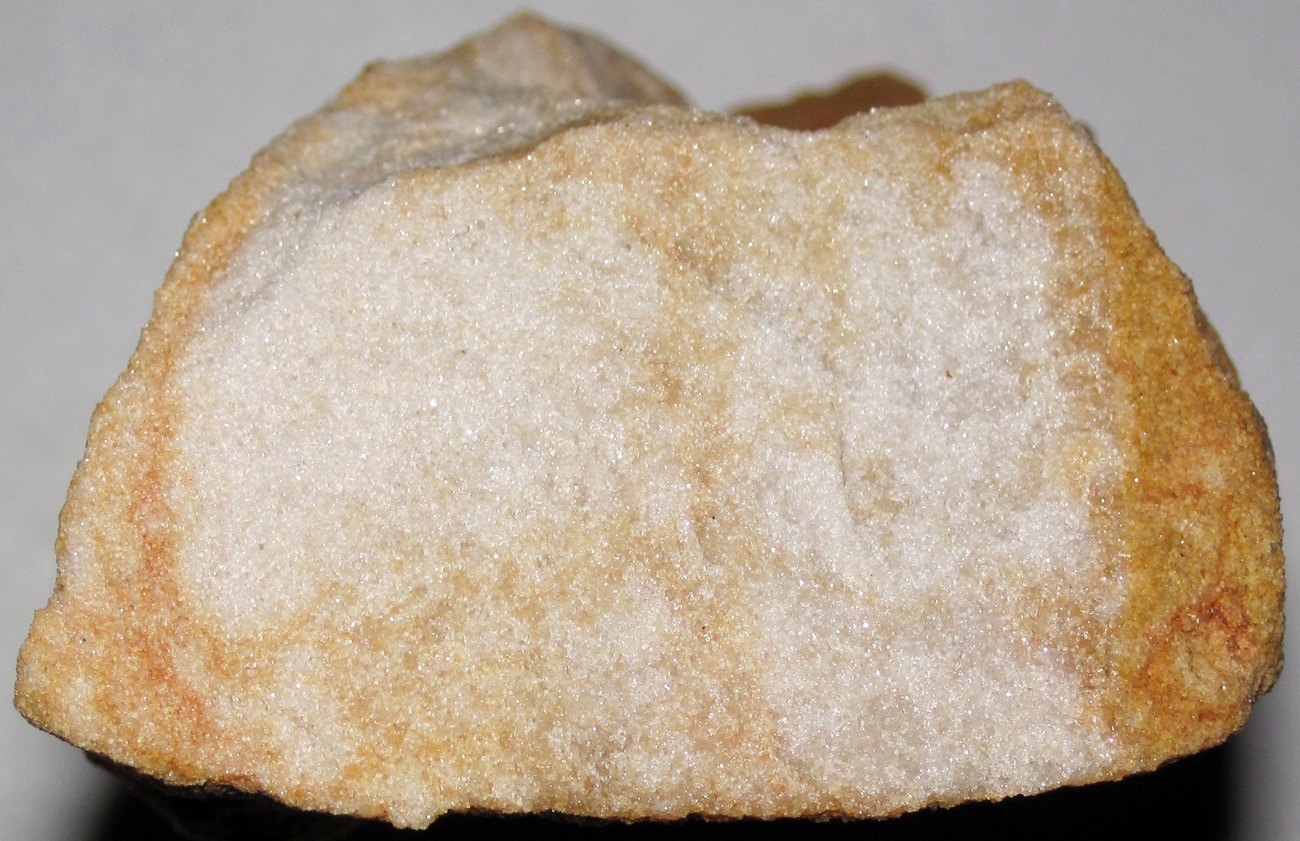

Look at the pale center of the Hillsboro specimen. The photographer describes angular to subangular quartz grains in this sample. Other quartz sands have well-rounded grains, so roundness alone is a weak test. A clear or glassy-looking grain without an obvious coating favors quartz. If you can only see a gritty surface, leave both possibilities open.
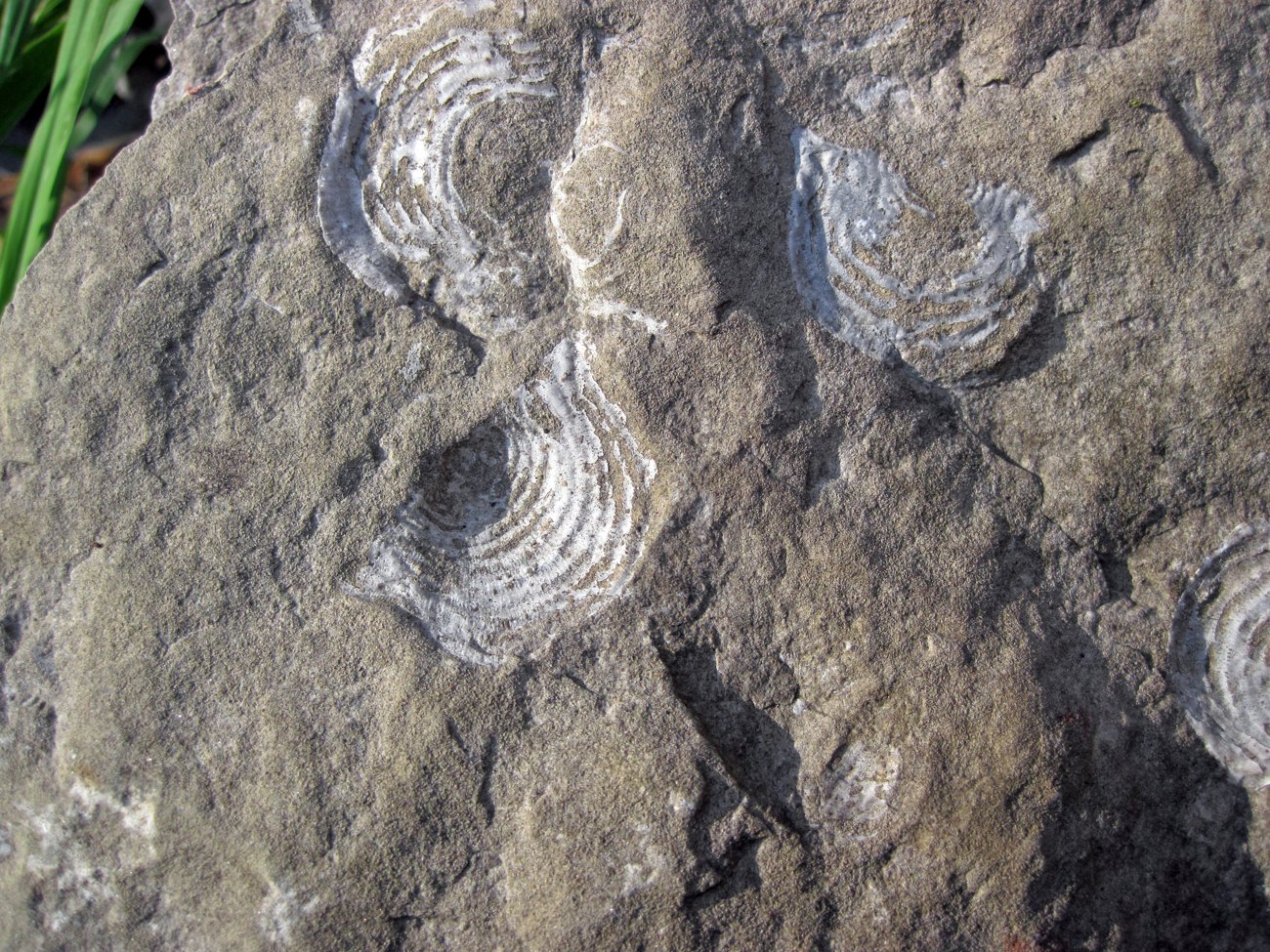

Follow the concentric ridges on one Ohio brachiopod shell. They span the curved surface of a single large shell. Compare that with the tiny rings enclosed inside each separate grain in an ooid-rich rock. Broken shells may appear as thin arcs in cross section. Ooids and shell fragments can occur in the same limestone.
| What you see in several places | What to record |
|---|---|
| Small rounded grains, some with nested internal rings | Coated grains consistent with ooids |
| Distinct quartz grains with glassy faces | Quartz-rich sand grains |
| Ribbed shells, curved walls or repeating chambers | Fossil material |
| Only pits or uniformly weathered bumps | Grain interiors unresolved |
What a carbonate test can tell you
Both oolitic and fossiliferous limestone commonly contain calcite. A carbonate reaction cannot distinguish their textures. Calcite can also cement a sandstone, so even a positive reaction on a mixed surface leaves the identity of the individual grains open. Compare the specimen with the limestone identification guide before drawing a conclusion from a single test.
Record a grain-scale comparison
Take an overview and a sharp close-up with the ruler in the same plane as the grains. Record the typical grain width and sketch one exposed interior. If you see shells between rounded grains, mark both on the sketch. Print the three-specimen grain comparison plate (PDF).
Sources
ROCK SCANIdentify your rocks
Take a photo to explore a possible match.
iPhone and Android · In-app purchases