How to Tell If a Rock Is a Geode
A rough, rounded rock could be a geode. Look for an existing opening that reveals crystals lining a cavity. If the rock is sealed, its shape and texture can help you choose what to compare, but they can’t confirm what’s inside.
In this guide
Check the outside first
Turn the rock over in daylight. Look for a rounded outline, a rough rind, and any opening that already exposes the interior. Tilt the piece toward the light and see whether the opening leads to a cavity with crystals attached to its walls. A sparkle on a solid face could come from a vein or a surface coating.
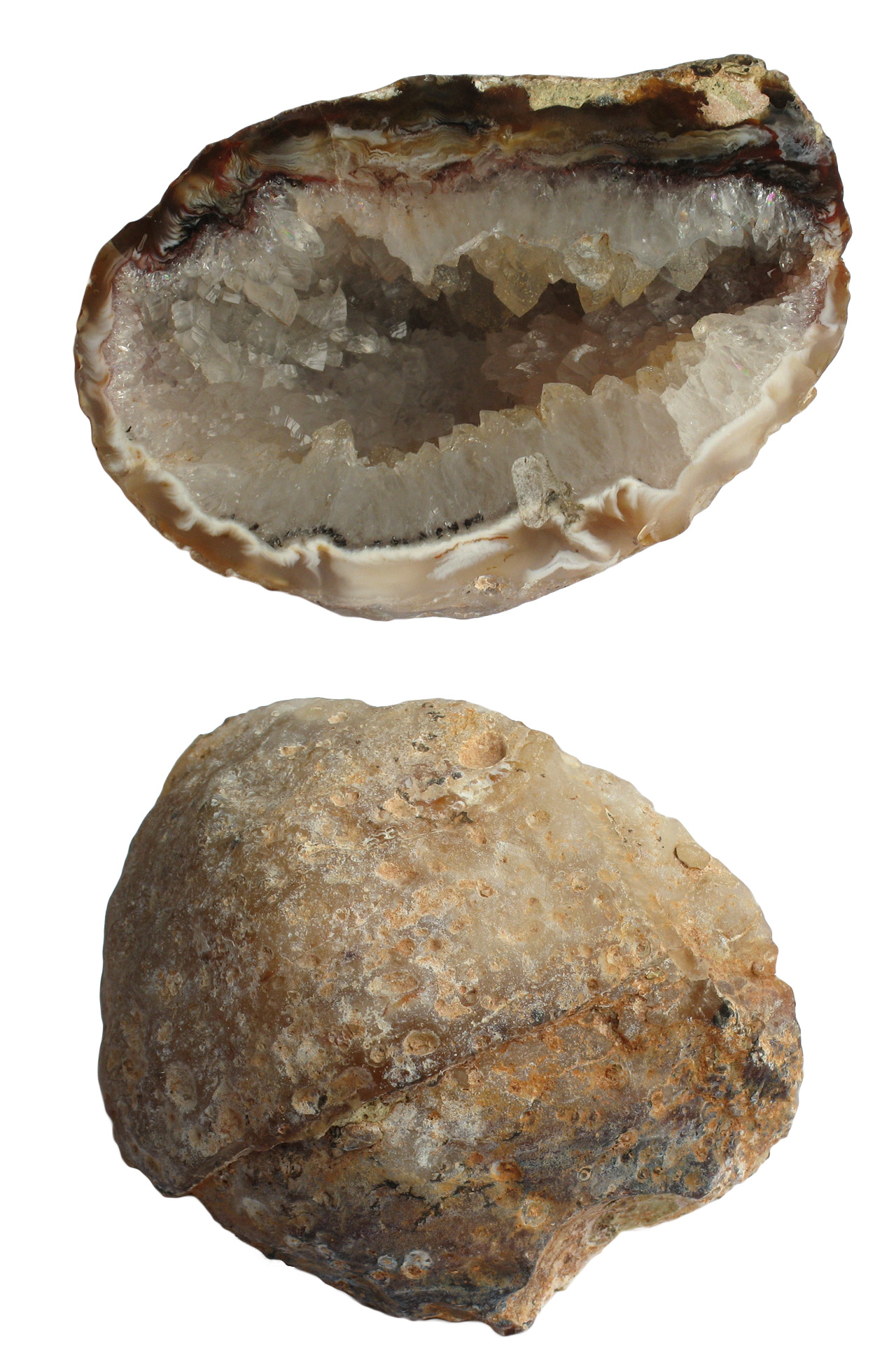

Compare the two views above. The rough exterior gives you an idea of what an unopened geode can look like. In the cut view, the crystals grow inward from the wall and leave open space near the center. That structure is the stronger clue.
 ROCK SCAN
Identify your rocks
Take a photo to explore a possible match.
iPhone and Android · In-app purchases
Compare a geode with its lookalikes
| What you see | What to consider |
|---|---|
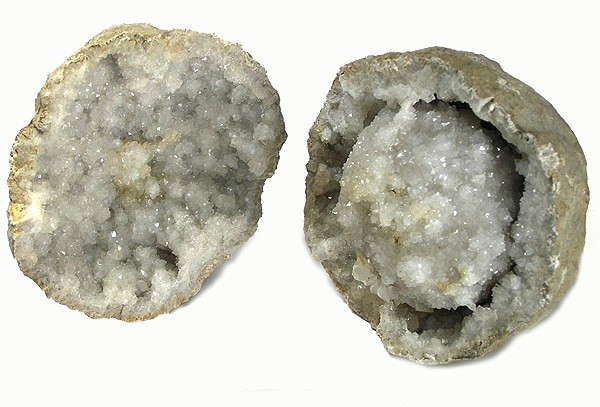
| Crystals attached to the walls of an internal cavity | A geode is a strong possibility. The Keokuk quartz geode at the top is one example. |
| A rounded nodule with no interior visible | Keep geode, concretion and other nodules open. Shape alone cannot settle it. |
| A mostly solid interior with bands or a contrasting center | Compare with an agate-filled nodule or a thunderegg. Some thundereggs also have cavities. |
| A rusty brown rounded lump | Compare the surface with ironstone, then look for additional evidence. Color alone is weak. |
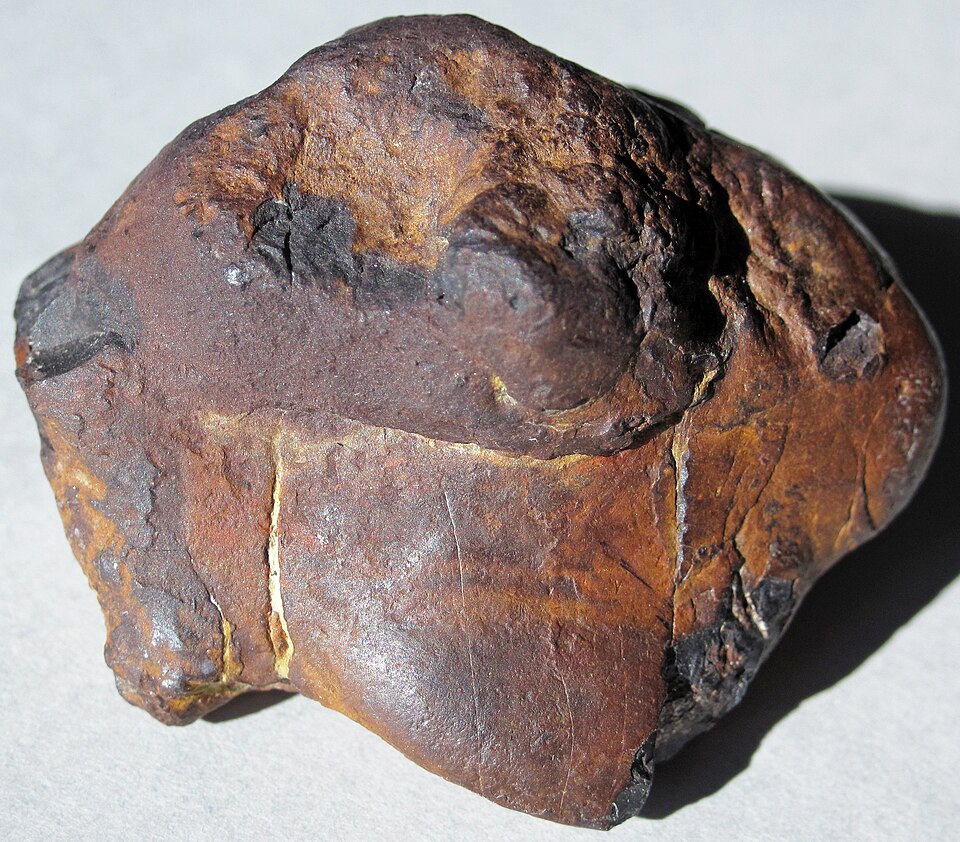

This ironstone nodule has a rounded outline and irregular surface. It shows why a lumpy rind is a clue to document. The New Mexico Bureau of Geology notes that some concretions are hollow too. Weight in your hand or a sound when the piece moves won’t identify the mineral or reveal whether crystals line a cavity.
Photograph a possible geode
- Take an overview beside a ruler and a second photo showing the opposite side.
- Photograph any existing opening from the side. Move the light until you can see the wall and the space behind it.
- Record where you found it and whether it was loose or still in the surrounding rock. Keep an unknown locality marked as unknown.
Can you tell without opening it?
If the piece is sealed, label it “possible geode” in your notes. Keep a valuable or borrowed specimen intact and ask a museum or rock club to examine it. If a cavity is already exposed, use our quartz crystal guide to compare crystal faces. For a mostly solid banded piece, see the rough agate guide.
Try Stone Identifier with your photos for a possible match, then check it against the cavity, rind and texture you recorded.
Sources
ROCK SCANIdentify your rocks
Take a photo to explore a possible match.
iPhone and Android · In-app purchases