Quartz crystal: natural shapes, faces and identification
Quartz is silicon dioxide, SiO₂. Well-formed quartz crystals often have six-sided prisms and pointed ends, but quartz also occurs as irregular grains and masses. Start with the natural faces you can actually see; a clear color or a manufactured point cannot confirm the mineral.
In this guide
What is a quartz crystal?
Quartz is the mineral silicon dioxide, written SiO₂. The Minerals Education Coalition's quartz record describes it in igneous, sedimentary and metamorphic rocks. A quartz crystal is not a separate rock type: the name refers to the mineral and its ordered internal structure.
The familiar pointed specimen is one outward form. A quartz grain inside granite and a large crystal on a collection shelf need not look alike. Our rock versus mineral guide explains how to distinguish a whole rock from an ingredient within it.
 ROCK SCAN
Identify your rocks
Take a photo to explore a possible match.
iPhone and Android · In-app purchases
Follow the long faces before counting the point
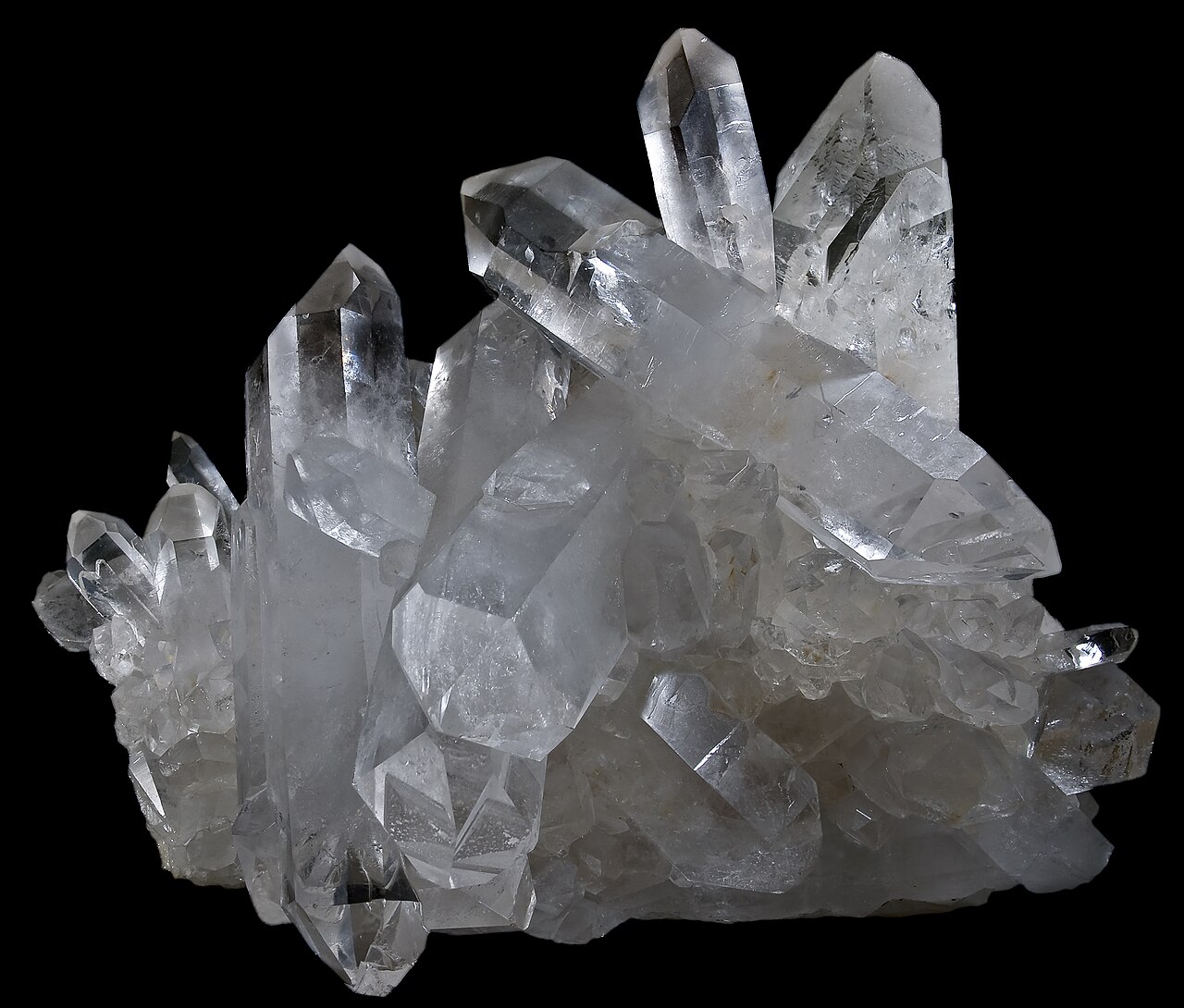
A well-developed quartz crystal often has a six-sided prism ending in a pointed arrangement of faces. The Oxford University Museum of Natural History's crystal-shape resource illustrates that geometry. Six sides describes the outline around the prism; it does not mean that every flat face on the entire specimen must be counted together.
Use the hero photograph as a reference. It shows a real quartz cluster with several points growing in different directions. Pick one exposed crystal and follow a long side face toward its tip. The shorter faces meeting at the end are a different part of the shape.
For your own specimen, try three observations:
- Find one long face and follow its edges without jumping to a neighboring crystal.
- Turn the specimen to see whether more side faces continue around the same point.
- Record hidden or broken parts instead of completing the outline from imagination.
A crowded cluster may conceal half a crystal. You can write “three adjoining long faces visible” without claiming you have measured the full shape. Keep the specimen intact; a photograph from another angle is more useful than removing a point.
Why quartz does not always have a point
The Mindat quartz morphology record describes individual crystals, aggregates, massive vein material and grains without well-developed outer faces. Many quartz crystals remain attached to surrounding material, and a crystal may have a broken or concealed termination.
An internal crystal structure and an obvious external crystal outline are different things. The Smithsonian's quartz collection explains how growth conditions affect a mineral's outward habit. An irregular piece therefore cannot be ruled out as quartz simply because it lacks a neat point.
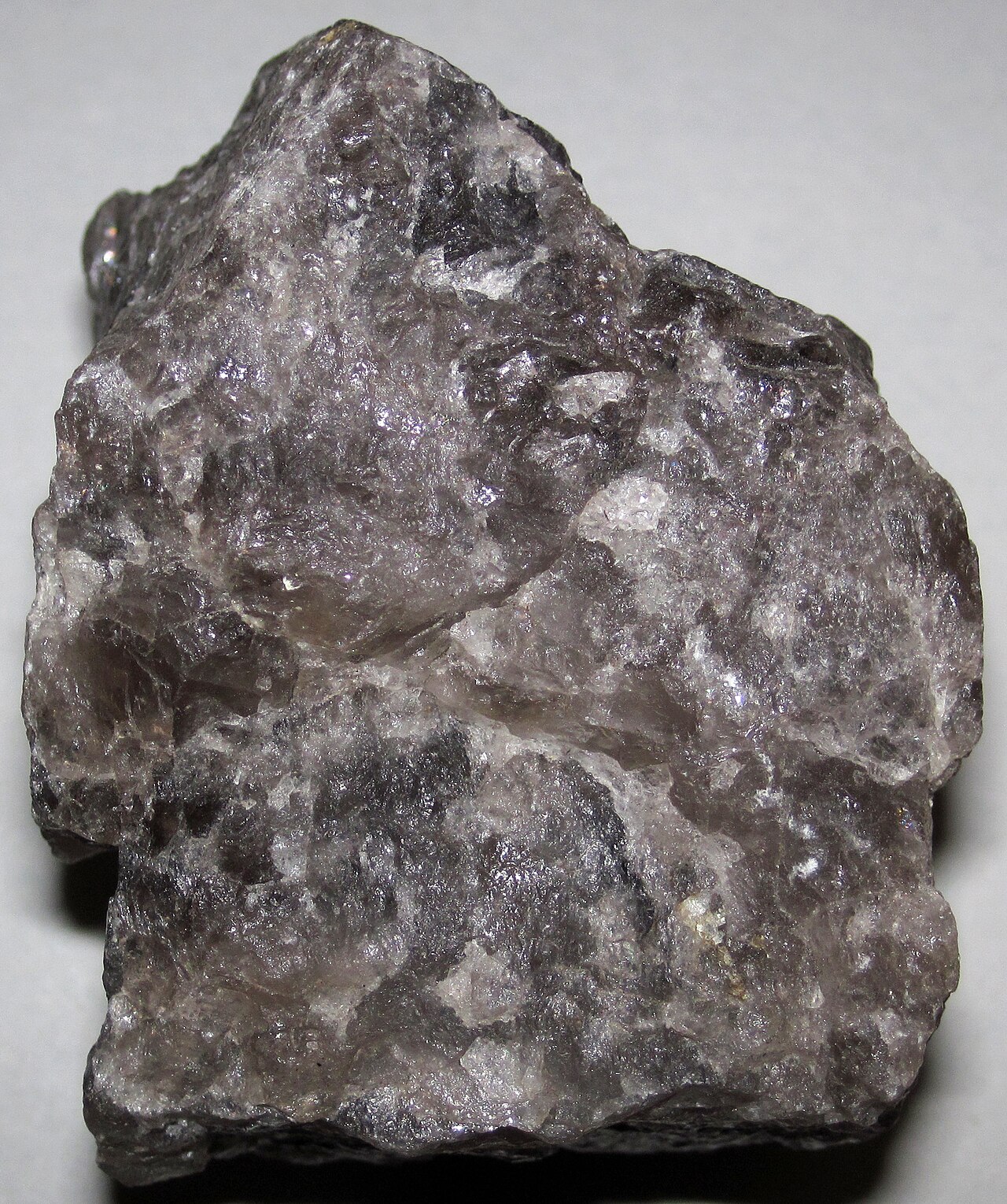

This reference is rough smoky quartz, not a complete crystal with a countable tip. Compare its irregular surfaces with the intact faces in the hero cluster. For brown or gray candidates, the smoky quartz guide covers the additional questions that color leaves open.
Clear quartz, amethyst and other variety names
The USGS mineral-gemstone reference lists rock crystal as colorless quartz, amethyst as purple quartz, and smoky quartz among the named varieties. Different variety names do not automatically indicate different minerals.
Color can help describe a specimen, but it is not a reliable identification by itself. “Clear, glassy point” and “purple cluster” both leave other candidates open. If purple color is the main reason for a suggested name, use our amethyst versus fluorite comparison alongside the shape observations.
ROCK SCANIdentify your rocks
Take a photo to explore a possible match.
iPhone and Android · In-app purchases
A cut point needs a different description
A geometric outline may come from cutting rather than crystal growth. The Smithsonian distinguishes a crystal's natural habit from the facets a lapidary cuts and polishes. A decorative tower's pointed silhouette cannot establish its original growth shape or mineral identity.
| Surface you have | Useful record | Limit to keep explicit |
|---|---|---|
| Natural cluster with exposed faces | Follow one crystal from its sides to its termination | Neighboring crystals may hide parts of the outline |
| Irregular rough piece | Photograph existing breaks and any preserved face | No intact point to count |
| Polished tower or cut gem | Record the manufactured shape and any supplier information | Cut facets are not evidence of the original habit |
| Rounded, tumbled pebble | Show all sides and visible internal features | Polishing may have removed recognizable faces |
If the finish is uncertain, record it as uncertain. A label or an attractive photograph is not a substitute for knowing which surfaces you are comparing.
Combine shape with other mineral properties
The quartz reference lists Mohs hardness 7 and conchoidal, or curved shell-like, fracture. The National Park Service's mineral guide describes how properties such as hardness and cleavage help distinguish minerals. A photograph can show an existing curved break, but cannot measure hardness.
If clear quartz and calcite are the leading candidates, continue with the quartz versus calcite guide. Keep hardness testing separate from observations you can make without marking a specimen. A reference hardness value does not mean that a collectible point or finished pendant needs a new scratch.
For a purple specimen, compare amethyst and fluorite. For a clear specimen with a visible broken edge, compare quartz and calcite.
Make the photo set answer a question
Take one image of the complete specimen, one side view of the clearest crystal, and one close-up of its end or existing break. Include a ruler in a separate view. For a cluster, show where the points join the base so a reviewer can follow the same crystal between images.
Use our observation sheet to pair those photographs with notes about the finish and where the specimen came from. Try Stone Identifier on iPhone or Android for a photo-based candidate, then compare its suggestion with the features you recorded. Leave composition, treatments and origin unconfirmed when the available evidence cannot establish them.
Sources
ROCK SCANIdentify your rocks
Take a photo to explore a possible match.
iPhone and Android · In-app purchases