Shiny Flecks in Quartz: Gold, Pyrite or Mica?
Gold dents, pyrite crumbles and mica splits into sheets. Start by turning one shiny fleck to see its face and edge.
In this guide
Follow one fleck around an edge
Pick a fleck you can find again beside a crack or crystal. Dry the surface, place it in diffuse daylight and turn it slowly under a hand lens. Look at the outline face-on and then from the side. A flat mica surface may flash brightly at one angle and almost vanish edge-on. A grain with several straight faces meeting at corners suggests a crystal such as pyrite. Gold can occupy an irregular seam or form a small, uneven mass. A photograph taken in direct sun can turn all three into white highlights.
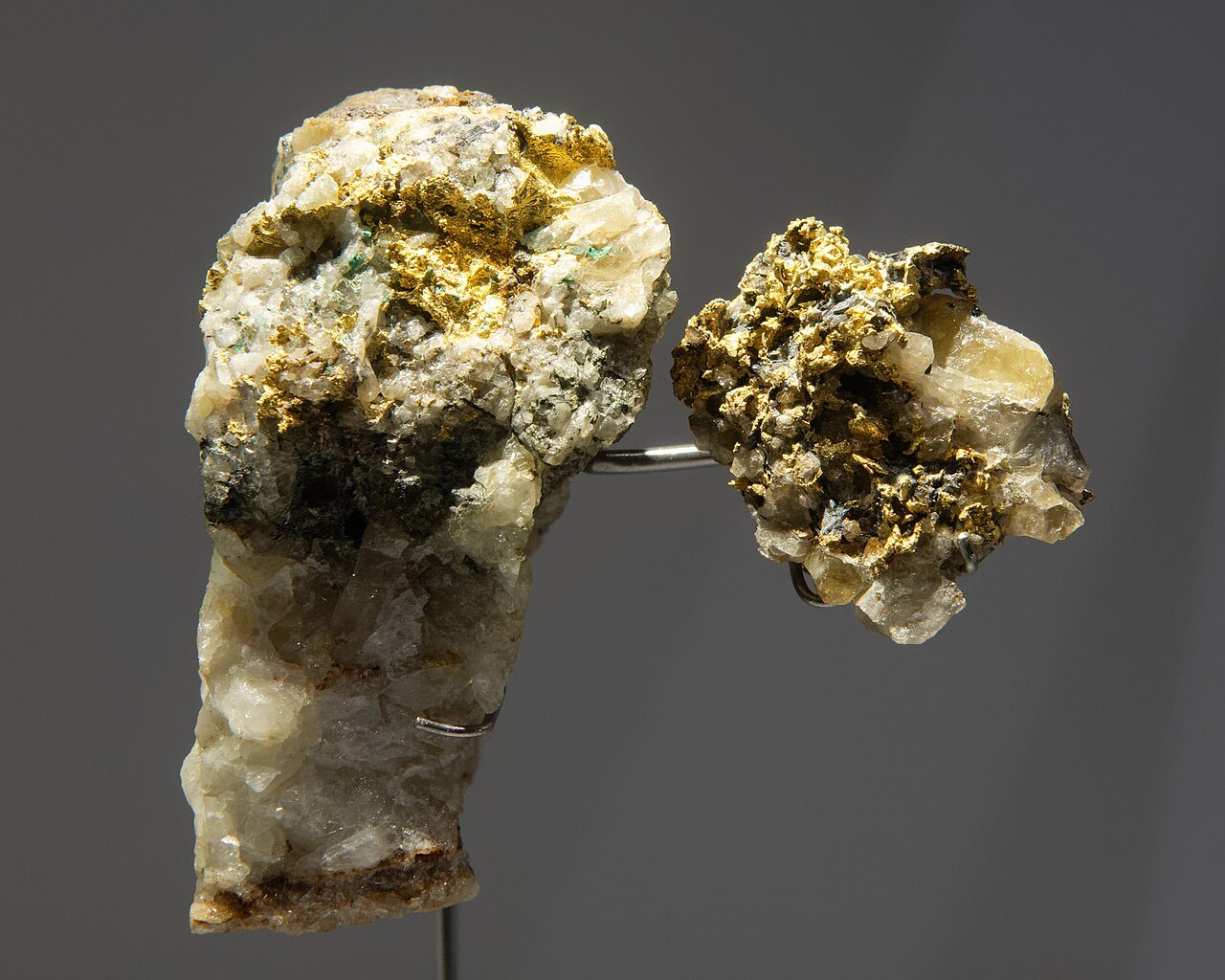
In the La Gardette specimens above, trace the yellow material around the edges of the white quartz. Its uneven outline is easier to see where the two colors meet. For a closer look at the host mineral, compare the surfaces in our quartz identification guide.
 ROCK SCAN
Identify your rocks
Take a photo to explore a possible match.
iPhone and Android · In-app purchases
Compare pyrite faces and mica sheets
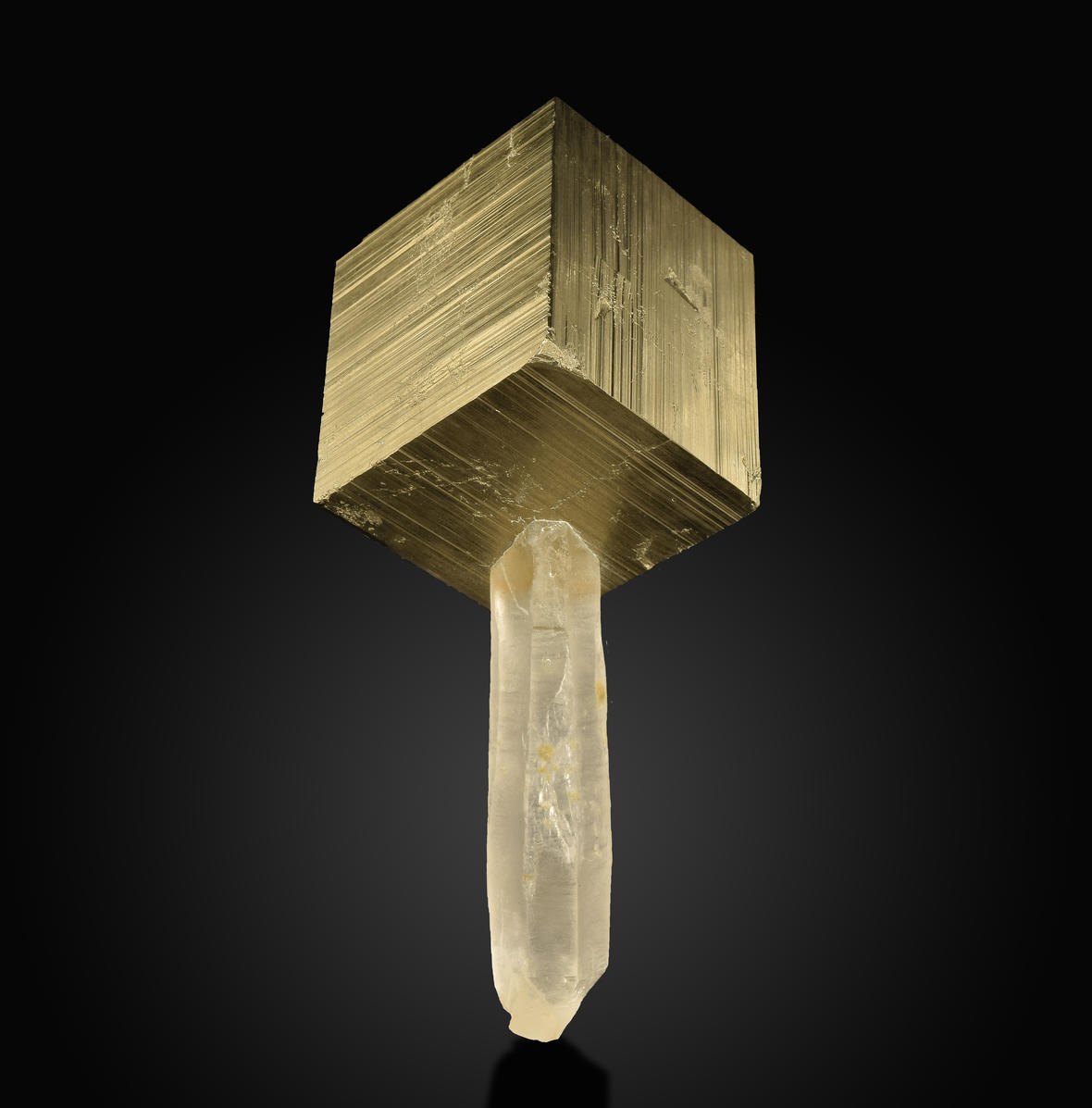

The USGS specimen from Washington measures 6.2 cm overall. Look closely at the parallel lines across the cube faces. A much smaller pyrite grain may expose only one face, so a perfect cube is a helpful example rather than a requirement.
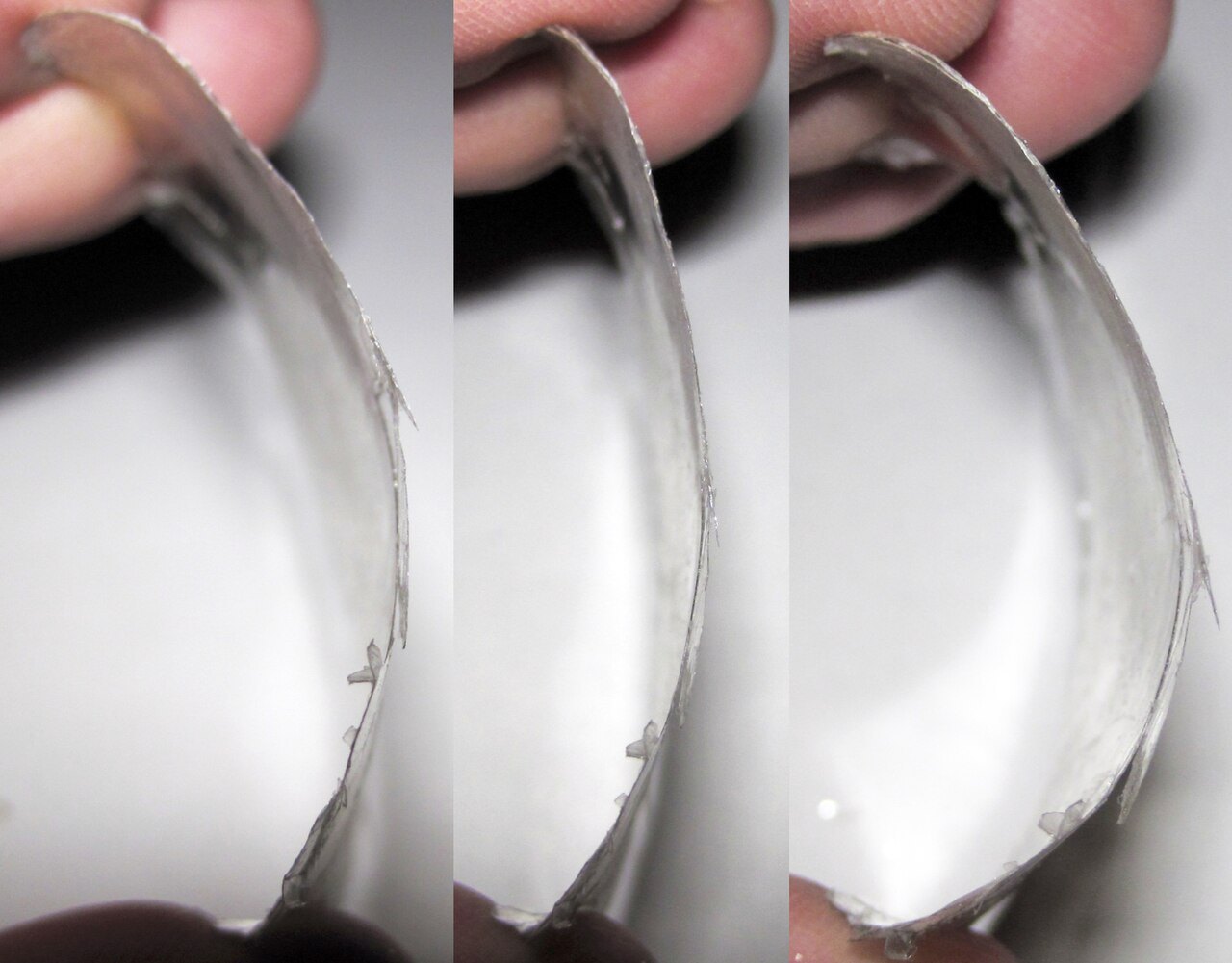

Seen from the side, this piece of muscovite is a flexible sheet. A small mica flake catches light across its broad surface and presents a narrow line at its edge. Several parallel edges can look like the leaves of a closed book. Leave attached flakes in place and look for layers already exposed on the side.
Check a loose grain
| Candidate | Shape under a lens | What an isolated grain may do |
|---|---|---|
| Native gold | An irregular yellow mass, wire or seam | Dents under gentle pressure from a metal point and gives a yellow streak |
| Pyrite | Brassy, angular grains, sometimes cubic | Breaks or crumbles and leaves a dark greenish to black streak |
| Mica | Thin plates flashing as they turn | Separates into sheets. Common micas give a pale or white streak |
A streak is the color of a mineral's powder on unglazed porcelain. Use only a spare, already detached grain large enough to hold and inspect. Dragging a quartz-rich rock across the plate can scratch the porcelain and leave pale ceramic dust. That mark tells you little about the yellow speck. If the speck is embedded, keep the specimen intact and take a close photograph with a scale.
A fourth possibility in quartz
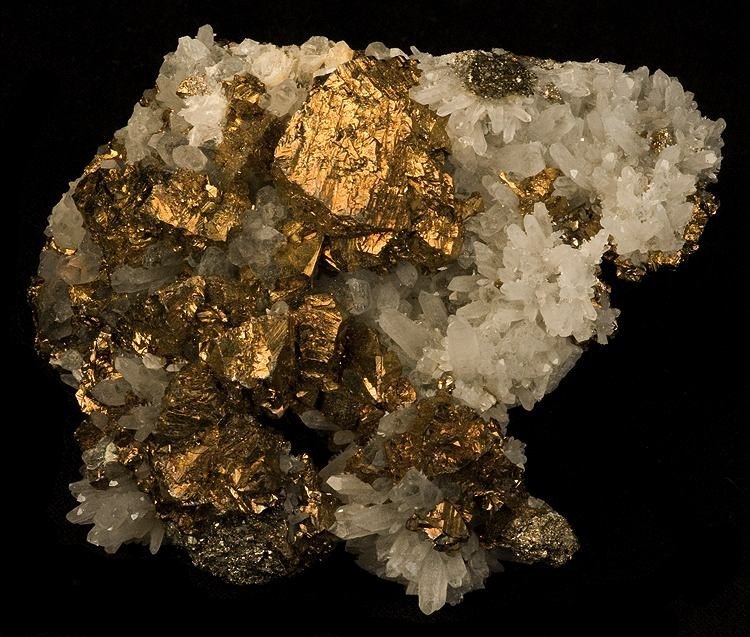

The largest brass-yellow crystal in this Peruvian specimen is about 2.5 cm across. Notice how the smaller grains change appearance against the white quartz. Some catch the light across a broad face, while nearby grains look almost black. Those color differences occur within one documented specimen of chalcopyrite.
Compare these grains with the sharply edged Washington pyrite cube above. If a loose yellow grain leaves a dark streak, both sulfides remain possibilities. Write down the crystal shape as well as the streak. If the only visible part is a bright spot wedged between two quartz points, photograph its outline and leave the species open.
Decide what the evidence supports
A brassy cube that crumbles is a good field match for pyrite. A yellow grain that dents and gives a yellow streak merits closer examination as possible native gold. If your only evidence is a pinpoint flash, “unidentified reflective grain in quartz” is a useful label until you can inspect a larger example.
Photograph the whole rock, the same fleck face-on, and its edge under diffuse light. A local geology department or mineral club may be able to identify an accessible grain. If the question is how much gold a rock contains, that requires an assay on a representative sample. The number of sparkles in a photograph cannot give a grade.
Print the gold, pyrite and mica field card (PDF) to compare all three specimens and note which observations came from the fleck itself.
Sources
ROCK SCANIdentify your rocks
Take a photo to explore a possible match.
iPhone and Android · In-app purchases