Shale rock: fine grains, thin layers, and identification clues
Shale is a fine-grained sedimentary rock made largely of clay minerals, often with other material mixed in. Many shales split into thin sheets. That tendency is called fissility. The combination of very fine texture and sheet-like splitting is more useful than dark color alone.
In this guide
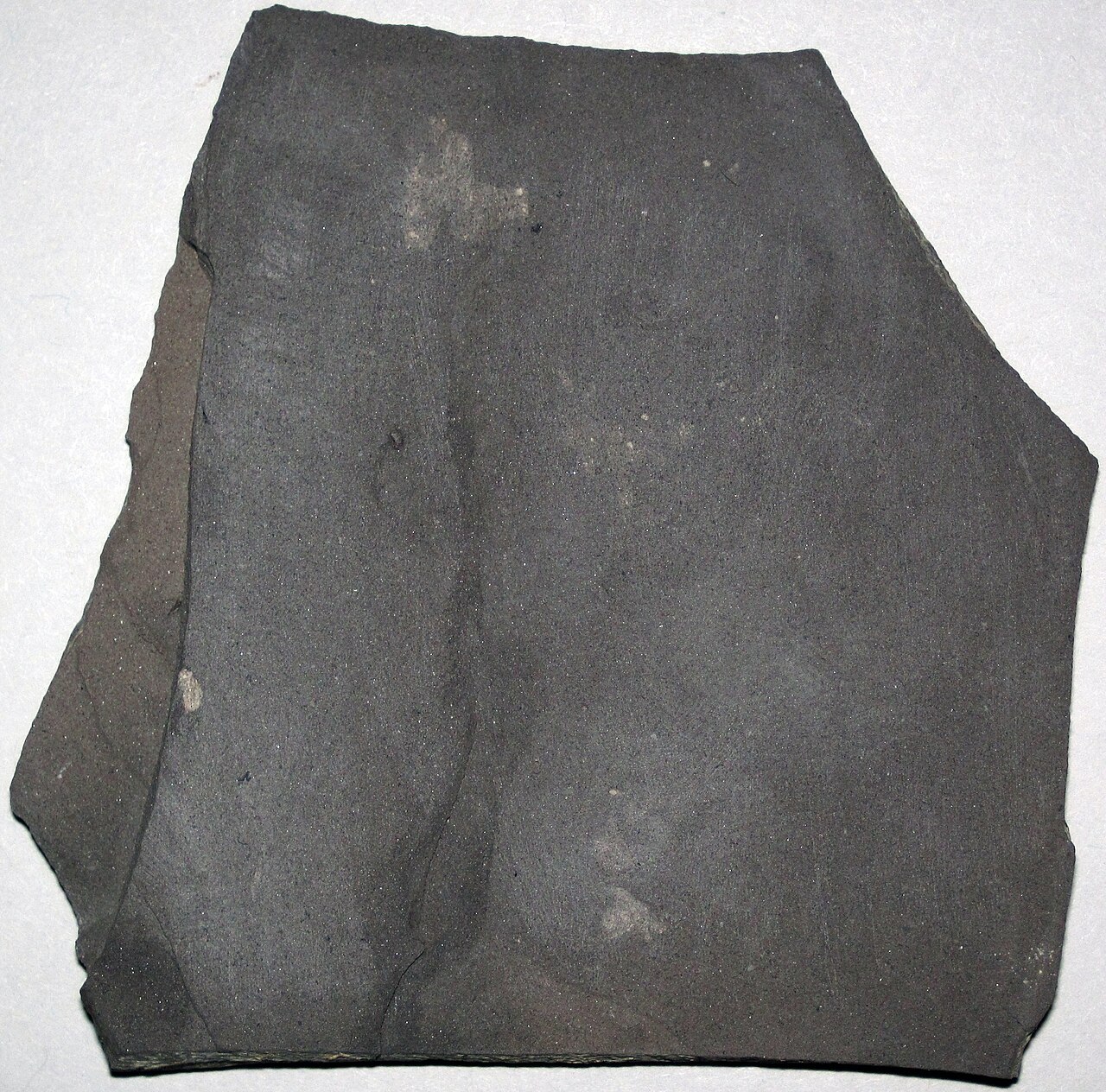
The specimen pictured here is black Sunbury Shale from Ohio. It illustrates one appearance; shale can also be gray, greenish, or other colors.
What to look for first
Examine an existing face and the edges of the sample. Are individual sand-sized grains obvious, or does the surface look uniformly fine? Are there thin, roughly parallel sheets or chips?
The Kentucky Geological Survey notes that most shales split into thin plates, while some material described as shale can break into irregular blocks. Terminology and preservation vary, so a single missing feature should prompt a closer comparison rather than an absolute rule.
Do not break a specimen just to create the textbook appearance. Existing chips, edges, and photographs of the surrounding exposure may provide the needed evidence.
Shale or slate? Look at an edge where a flat break meets a layer you can trace. Breaks that follow the bedding fit shale. Several flat breaks crossing older bedding can point to slate. If you see only one set of lines, keep both possibilities open. The slate vs. shale comparison shows what to photograph.
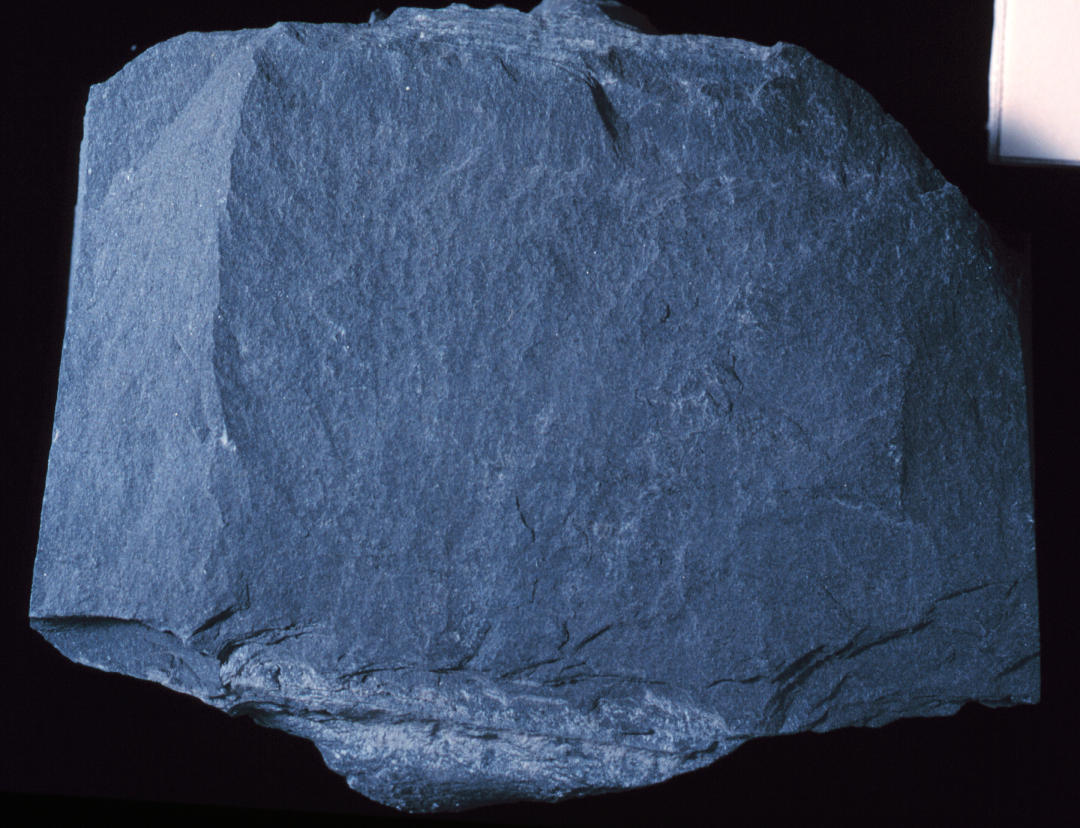

This slate specimen has broad flat faces. Compare an edge before using flatness as a clue.
 ROCK SCAN
Identify your rocks
Take a photo to explore a possible match.
iPhone and Android · In-app purchases
How shale forms
Shale belongs to the sedimentary group. Fine sediment accumulates and is changed into rock through burial and lithification. The National Park Service describes compaction and cementation as important parts of sedimentary rock formation.
A fine texture records the size of the material, but it does not by itself reveal a unique location or age. Naming a formation requires geological context. A loose dark chip found far from its original outcrop cannot reliably supply that history on its own.
Avoid the “flat and black” shortcut
Several materials can be flat or dark. Before labeling a sample shale, compare its grain size, surfaces, and splitting pattern together. A rock with obvious larger sand grains follows a different path from a very fine-grained sample. A specimen showing many pebble-sized clasts is better compared with conglomerate.
Shale also contains more than clay alone. The Kentucky Geological Survey describes variable amounts of quartz, organic matter, and calcareous material. Color and behavior can therefore vary between specimens.
Preserve the clues
Shale may weather readily, and a fragile sample can lose useful edges if handled roughly. Keep loose fragments together with a location note. Photograph the specimen before attempting cleaning, and do not assume an unidentified layered rock is suitable for prolonged soaking or vigorous scrubbing.
For an identification record, capture the whole sample, a close view of its fine surface, and a side view showing any layers. Include a scale. Describe observations such as “dark, very fine-grained, splitting into thin chips” before choosing a final name.
If you are also examining a distinct crystal in the same collection, our quartz versus calcite guide explains a mineral-level comparison. A rock name and the names of minerals within it serve different purposes.
Compare the slate identification guide when a very fine-grained specimen has persistent flat partings. It explains how to record the differences between shale, slate and phyllite.
Compare a photo with these clues
Try Stone Identifier on iPhone or Android for a photo-based starting point, then compare the suggestion with the visible features described here. A photo suggestion is not a conclusive specimen test.
Sources
ROCK SCANIdentify your rocks
Take a photo to explore a possible match.
iPhone and Android · In-app purchases