Conglomerate rock: how to recognize pebbles cemented together
Conglomerate is a sedimentary rock containing rounded pieces of older rock or minerals cemented together. Look for individual pebbles held in a finer background, rather than a single smooth mineral or a loose pile of gravel. The large pieces are called clasts; the finer material between them is the matrix.
In this guide
Three clues to check
Start with an existing exposed surface. You do not need to break the specimen.
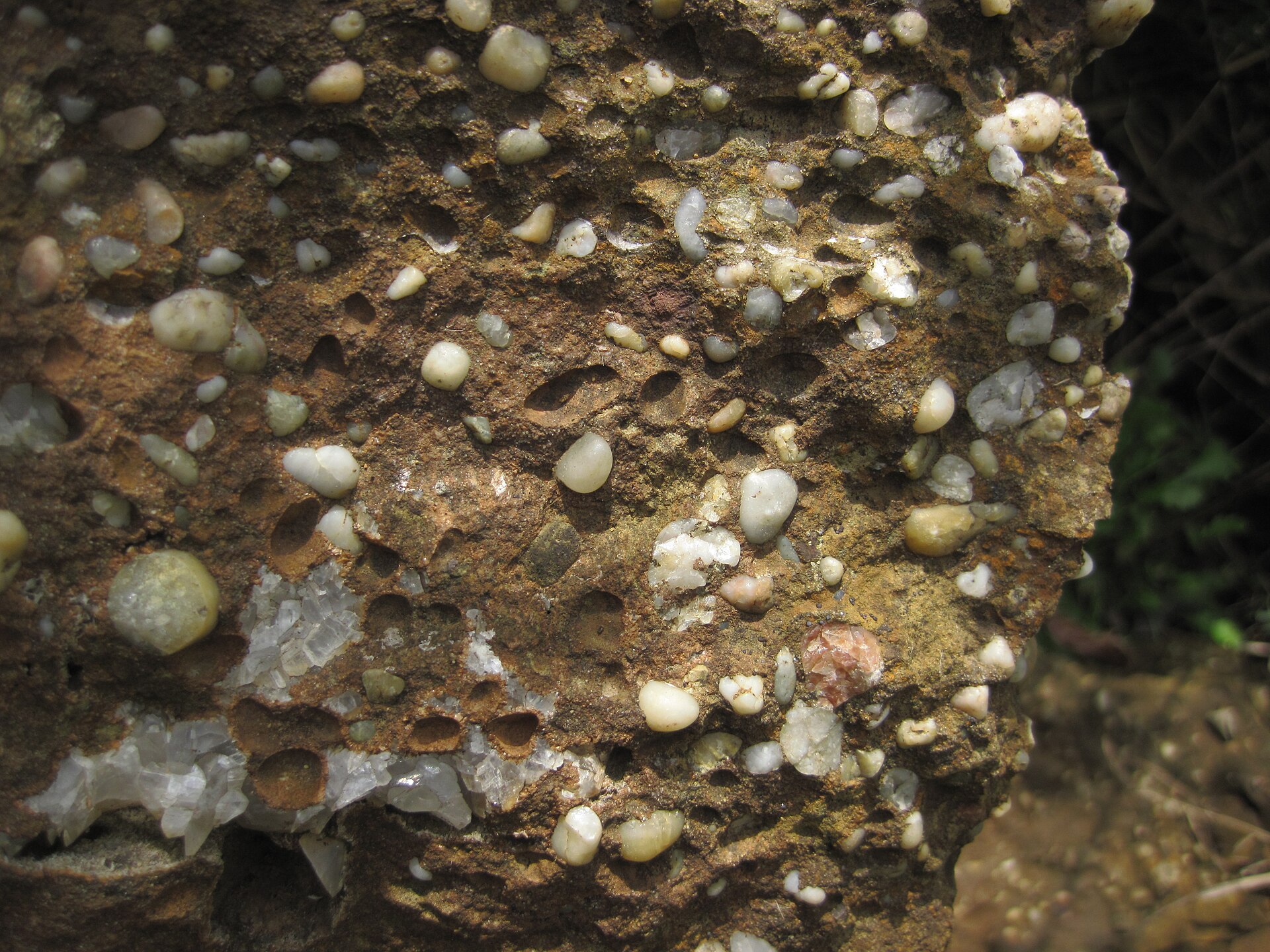
- Find the individual pieces. Look for pebble-sized fragments that have distinct boundaries. A ruler in the photograph helps show whether you are seeing grains or larger clasts.
- Look at their outlines. Many clasts should have rounded or partly rounded edges. Do not judge the whole rock by the shape of one fragment.
- Examine the material between them. Sand and finer sediment fill spaces, while mineral cement binds the material into rock. The cement may be silica, iron oxide, or calcium carbonate, as described by the Kentucky Geological Survey.
The photograph shows an example from Ohio with pale quartz pebbles in a darker background. It is one example, not a color template: conglomerate does not have to match these colors.
 ROCK SCAN
Identify your rocks
Take a photo to explore a possible match.
iPhone and Android · In-app purchases
Conglomerate versus breccia
Both rocks contain visible fragments of older material. The useful first distinction is the fragments' shape. Conglomerate has rounded clasts; breccia has angular ones. A mixed or strongly weathered specimen can be harder to classify, so photograph several faces rather than forcing a name from a single view.
If the surface consists mainly of much smaller sand grains, compare it with sandstone. If pebbles come apart because they were never cemented together, you may simply have loose gravel. A photograph of gravel cannot show the same evidence as an intact rock with embedded clasts.
Compare embedded corners with a real breccia
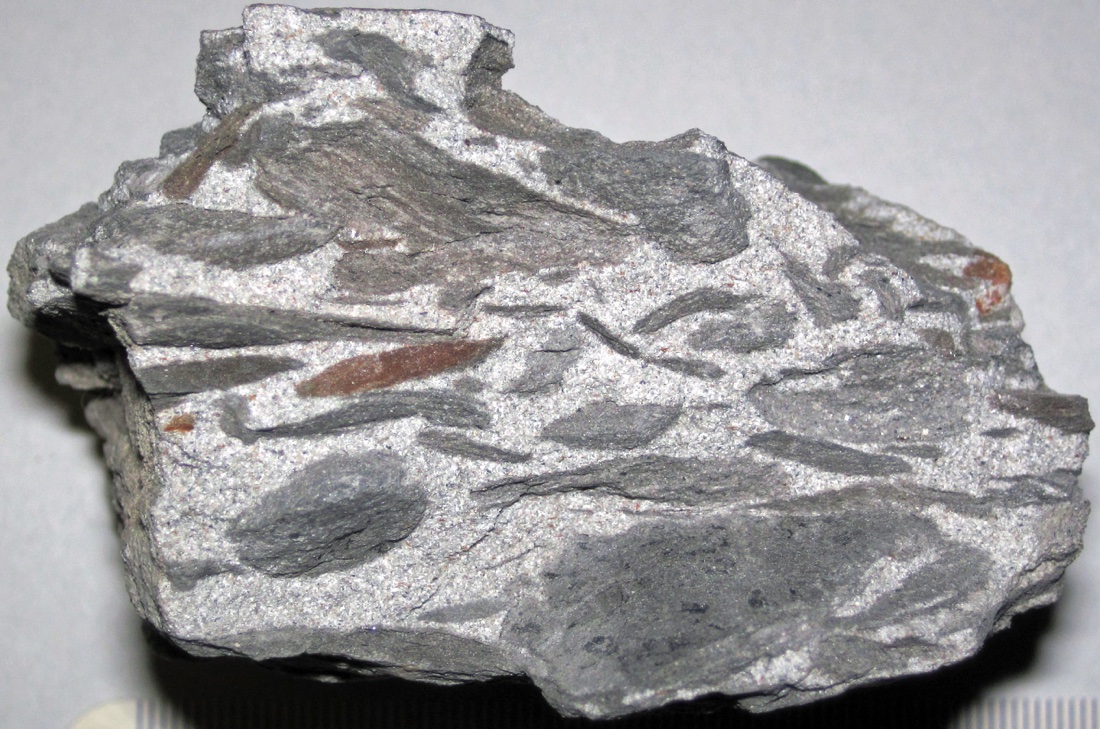

In this Ohio specimen, the long dark pieces have visible corners where they meet the lighter material around them. They are solid fragments embedded in the rock. Compare their ends with the curved pale pebbles in the conglomerate photograph above.
Trace several boundaries before choosing a name. A pit can cast a dark shadow, and a stain can resemble a fragment in a single view. Change the lighting and check that the outline encloses material. If several pieces have mixed or obscured shapes, record that observation and keep the identification tentative.
The conglomerate vs. breccia comparison shows both photographs and a step-by-step boundary check. This breccia example contains rip-up clasts, which can form when a current tears up partly consolidated sediment. Angular fragments can form in several settings, so their shape alone cannot establish where a loose specimen originated.
ROCK SCANIdentify your rocks
Take a photo to explore a possible match.
iPhone and Android · In-app purchases
What the pebbles can tell you
Rounding is evidence that fragments were worn during transport. Streams and beaches can roll and abrade stones before the sediment becomes rock. Burial, compaction, and cementation are part of the broader sedimentary story explained by the National Park Service.
That story has limits. Rounded pebbles alone do not establish a rock's age, exact origin, or the distance each fragment traveled. Those questions need the surrounding geology and, often, specialist examination.
Record a useful identification photo
Take one picture of the whole specimen and another close view showing both clasts and matrix. Include a scale, use natural light, and keep any locality information with the photographs. Record what you can see before adding an interpretation: “rounded pale pebbles in a brown matrix” is more useful than an unsupported age or formation name.
If you are comparing an individual quartz pebble with a crystal, our quartz versus calcite guide explains why mineral identification is a separate question from naming the whole rock.
Compare a photo with these clues
Try Stone Identifier on iPhone or Android for a photo-based starting point, then compare the suggestion with the visible features described here. A photo suggestion is not a conclusive specimen test.
Sources
ROCK SCANIdentify your rocks
Take a photo to explore a possible match.
iPhone and Android · In-app purchases