Serpentinite vs. Greenstone in a Hand Specimen
Serpentinite is a rock made mostly of serpentine minerals. Greenstone, as used here, is metamorphosed basalt. Green color fits both. Look for a combination of surface sheen, veins and surviving volcanic features, then check what the geologic map records at the collection site.
In this guide
Read the surface of the serpentinite specimen
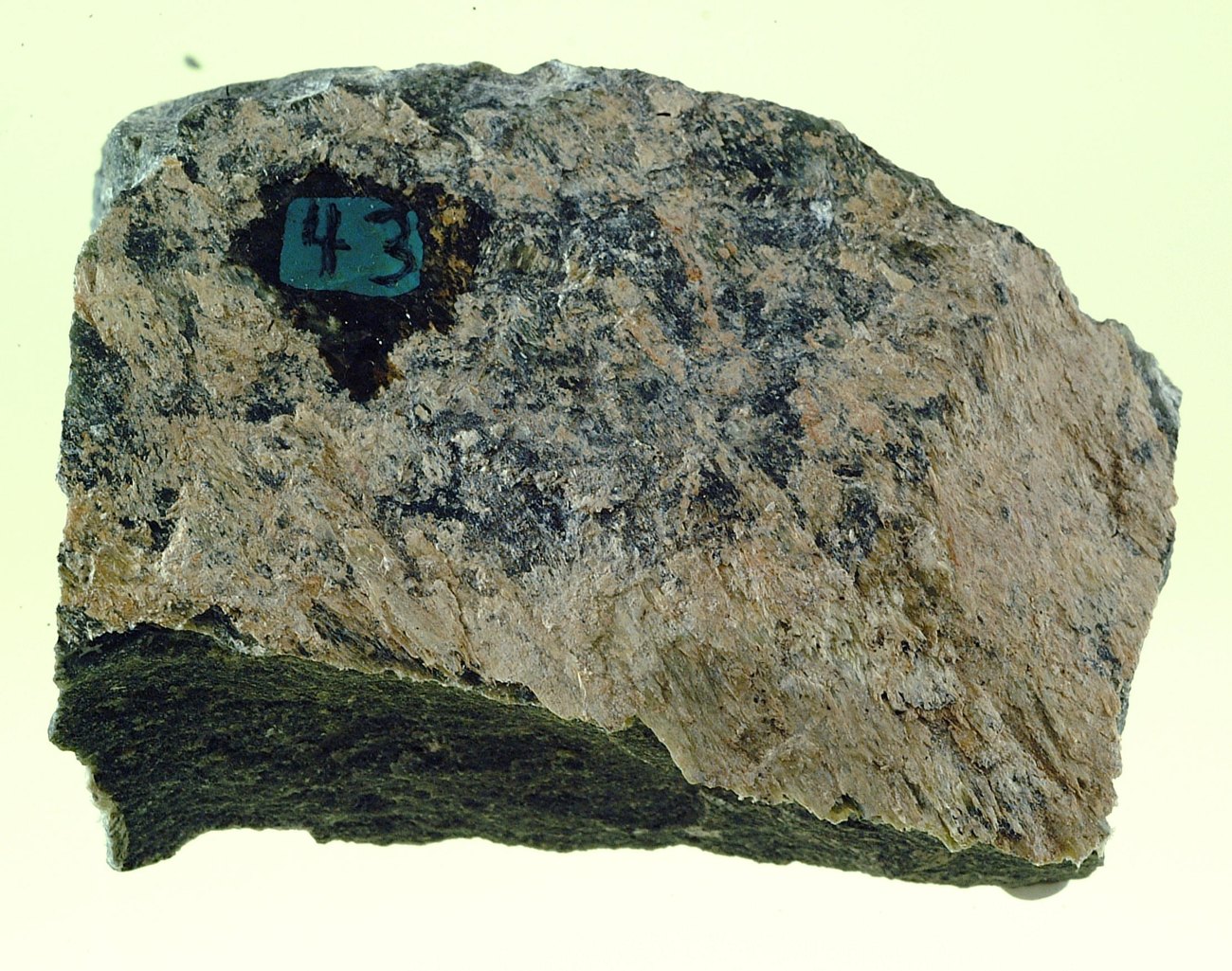
The Underhill Formation sample above is about 8 cm across. Its pale face carries streaks, while the edge exposes darker rock. The collection identifies it as mostly antigorite, a serpentine mineral. Movement along the surface left polished grooves called slickensides. A smooth patch with parallel lines records sliding along that face. Other rocks can acquire slickensides too.
Serpentinite commonly forms when water reacts with magnesium-rich rock such as peridotite. Look for patches of different green tones, a waxy-looking sheen or a network of veins. No single feature identifies the minerals in those veins. Some serpentinite contains chrysotile asbestos. Examine existing surfaces without scratching, cutting or grinding. Leave material with exposed fibers undisturbed.
 ROCK SCAN
Identify your rocks
Take a photo to explore a possible match.
iPhone and Android · In-app purchases
Look for a volcanic texture in greenstone
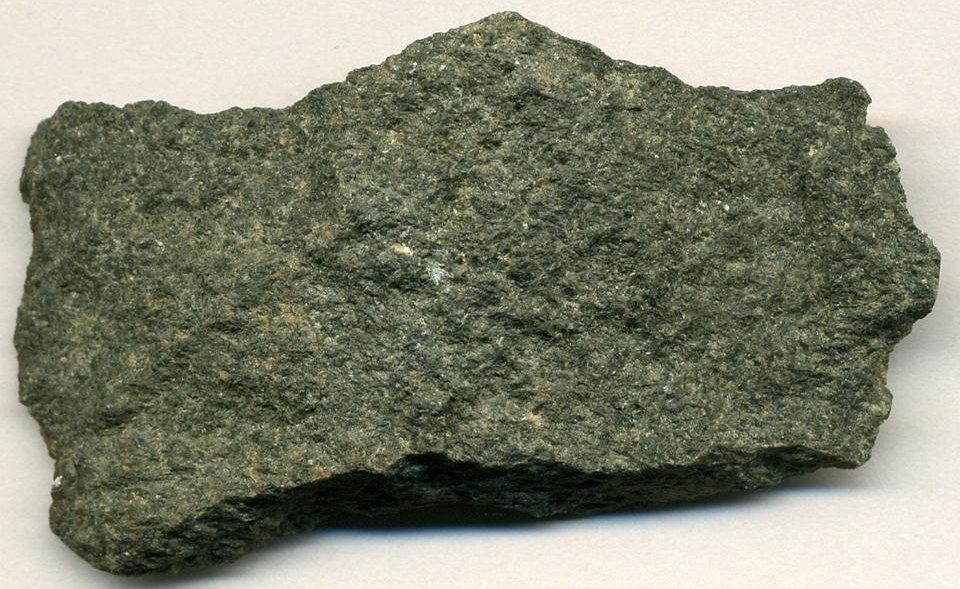

The Michigan sample measures 6.5 cm across. The broken face is mottled and fine-grained. Its source unit preserves pillow-shaped lava bodies at outcrop scale, a clue you would miss if this piece turned up loose. Chlorite, epidote and actinolite can contribute green hues in metamorphosed basalt.
Some greenstones preserve amygdules, small cavities left by gas bubbles in lava and later filled by minerals. Look for a group of discrete oval fillings enclosed by the surrounding fine-grained rock. A vein takes a different path, crossing the rock along a fracture and sometimes branching. Neither shape by itself proves the rock type. For an example of the original open cavities, see vesicular basalt.
Compare the evidence on your specimen
| Observation | How it changes the identification |
|---|---|
| Waxy-looking patches and a branching network of veins | Consider serpentinite and compare with a documented sample |
| Many separate mineral-filled ovals in a fine matrix | An altered volcanic rock becomes more plausible |
| A green, granular face with few other features | Keep the identification open |
| Nearby bedrock mapped as serpentinite or metabasalt | Stronger supporting evidence for a piece still attached to that outcrop |
Check the locality and the label
Copy the location and wording on any original collection label. A loose river pebble can have traveled far from the mapped rock beneath it. If all you know is its color, start with the broader green rock comparison. A geologist may need a thin section or mineral analysis to distinguish a strongly altered specimen.
Print the serpentinite and greenstone comparison sheet (PDF). Use it to note the shape of a vein or filling, the surface that carries it and where the sample came from.
Sources
ROCK SCANIdentify your rocks
Take a photo to explore a possible match.
iPhone and Android · In-app purchases